
The short version: lenders do not qualify you on the sticker price, they qualify you on the monthly payment. At the 6.71% model rate (Freddie Mac average, week of September 3, 2026) the payment on $850,000 is $7,104 with the smallest FHA down payment, and the income that supports it lands between $198,259 and $275,004 depending on how much other debt you carry. Every table below is that one calculation, re-run at each rate and in each place.
What an $850,000 house costs each month
The payment has four parts: principal and interest ($5,391 at 6.71% with 3.5% down), FHA mortgage insurance ($383), and property tax plus home insurance ($1,331, the median of the 80 metros in the Foothold dataset). Taxes are the part that moves most from place to place, and the table after this one shows how far.
| Mortgage rate | 3.5% down (FHA) | 20% down (conventional) |
|---|---|---|
| 5% | $6,194 | $4,981 |
| 5.5% | $6,452 | $5,192 |
| 6% | $6,717 | $5,408 |
| 6.5% | $6,988 | $5,629 |
| 6.71% (model rate) | $7,104 | $5,723 |
| 7% | $7,266 | $5,855 |
| 7.5% | $7,549 | $6,085 |
The income you need for an $850,000 house at each rate
Two guidelines, not one: FHA’s front-end ratio says the housing payment should stay under 31% of gross income. Its back-end ratio says all debt together should stay under 43%. A buyer with no car loan, no student loan and no card balance can qualify near the 43% line; a buyer carrying $500 a month of other payments is pushed back toward the 31% figure. Real approvals land between the two.
| Mortgage rate | Payment (3.5% down) | Income at 31% (front-end) | Income at 43% (back-end, no other debt) |
|---|---|---|---|
| 5% | $6,194 | $239,750 | $172,843 |
| 5.5% | $6,452 | $249,755 | $180,056 |
| 6% | $6,717 | $260,016 | $187,454 |
| 6.5% | $6,988 | $270,522 | $195,027 |
| 6.71% (model rate) | $7,104 | $275,004 | $198,259 |
| 7% | $7,266 | $281,259 | $202,768 |
| 7.5% | $7,549 | $292,215 | $210,667 |
How local taxes and insurance change the payment on $850,000
The same $850,000 house carries a $6,516 payment in Salt Lake City, UT and $8,230 in Omaha, NE, a gap of $1,714 a month, most of it property tax. That gap is worth $66,335 of qualifying income on the front-end guideline, which is why a price that is out of reach in one metro is comfortable in another on the same salary.
| Metro | Effective tax rate | Tax + insurance a month | Payment on $850,000 | Income at 31% |
|---|---|---|---|---|
| Salt Lake City, UT | 0.54% | $742 | $6,516 | $252,228 |
| Phoenix, AZ | 0.46% | $836 | $6,610 | $255,863 |
| Washington, DC | 0.78% | $838 | $6,612 | $255,942 |
| Omaha, NE | 2.11% | $2,456 | $8,230 | $318,563 |
| McAllen, TX | 1.87% | $2,452 | $8,226 | $318,421 |
| Jacksonville, FL | 1.24% | $2,332 | $8,105 | $313,761 |
Where $850,000 buys a duplex instead
The part most buyers miss: on a two-to-four-unit home the lender counts 75% of the other unit’s rent as your income. In 16 of the 83 metros in the dataset an $850,000 budget clears the entry price for a duplex and sits under the FHA two-unit loan limit. In Washington, DC, that credit takes the qualifying payment on $850,000 from $6,612 down to $4,951, so the front-end income drops from $255,942 to $191,650.
| Metro | Duplex entry price | 1BR rent (market) | Net payment on $850,000 | Income at 31% |
|---|---|---|---|---|
| Washington, DC | $850,000 | $2,214 | $4,951 | $191,650 |
| Miami, FL | $675,000 | $2,102 | $6,189 | $239,588 |
| Oxnard, CA | $829,000 | $1,985 | $5,467 | $211,622 |
| Los Angeles, CA | $790,000 | $1,976 | $5,665 | $219,296 |
| Bridgeport, CT | $539,999 | $1,762 | $6,212 | $240,469 |
| Charleston, SC | $575,000 | $1,731 | $5,527 | $213,955 |
| Atlanta, GA | $375,000 | $1,592 | $5,871 | $227,278 |
| Riverside-San Bernardino, CA | $559,990 | $1,585 | $5,519 | $213,633 |
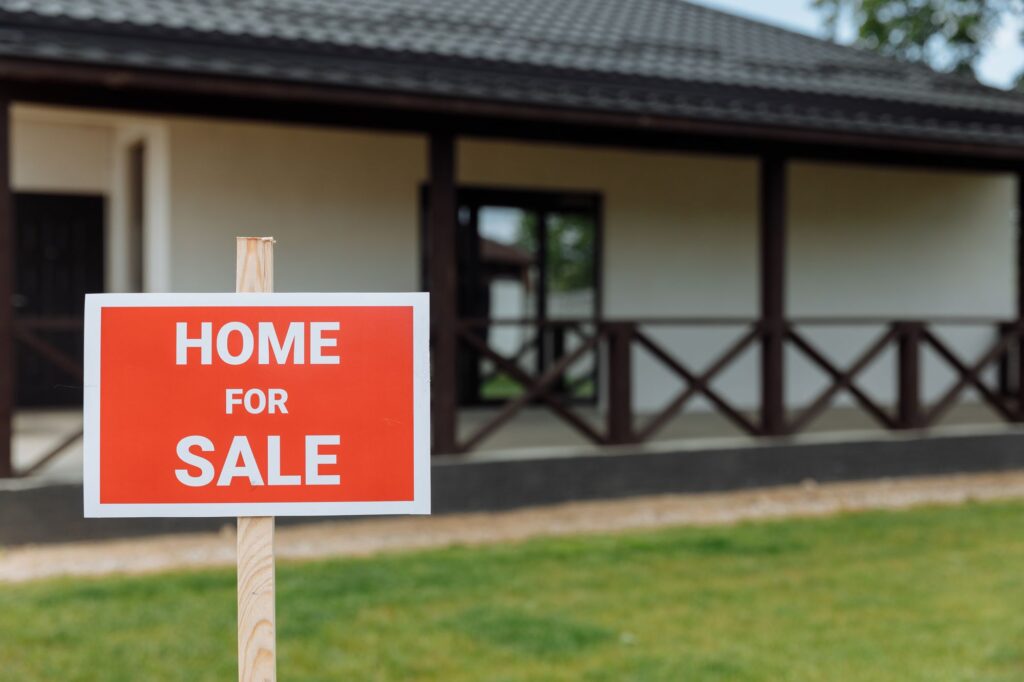
The down payment on an $850,000 house
Where these numbers come from
- Mortgage rate: 30-year fixed, Freddie Mac Primary Mortgage Market Survey, week of September 3, 2026: 6.71% is the model rate used throughout; the tables re-run the same payment at each rate.
- Loan terms and mortgage insurance: FHA 3.5% minimum down payment, 1.75% upfront and 0.55% annual mortgage insurance premium, HUD Handbook 4000.1. Qualifying ratios: FHA 31% front-end and 43% back-end, same handbook. Rental income credited at 75%, the lender convention for two-to-four-unit homes.
- Property taxes: county effective rates for 80 metros. Insurance: state average premiums scaled to price. The national row is the median of those metros, not a US average.
- FHA loan limits: HUD CHUMS CY2026 forward limits by county, one-unit and two-unit columns.
- Duplex entry prices and rents: the Foothold dataset, active two-to-four-unit listings screened Jun-Aug 2026; the one-bedroom rent is the average of Zumper and Apartment List metro asking rents (May to July 2026), which the model scales per ZIP by HUD FY2026 Small Area Fair Market Rents.
- Area median income and the 80% limit: HUD FY2026 Income Limits (Section 8), huduser.gov.
- All of it, as one file: the open data page (CC BY 4.0).
Figures are estimates for comparison, not a loan quote. Your lender prices your rate, your county sets your tax bill, and your credit file sets your ratios. Verify before you offer.
Questions people ask about an $850,000 house
Can I afford an $850,000 house on $200,000 a year?
An $850,000 house costs about $7,104 a month with 3.5% down at 6.71%, which is 42.6% of a $200,000 salary. That sits between FHA’s 31% and 43% guidelines, so it works with little or no other monthly debt. At $190,000 the payment is 45% of income, over the 43% line. A bigger down payment, a lower rate or a duplex with a rent-paying unit each pull the ratio down.
What is the monthly payment on an $850,000 house?
The monthly payment on an $850,000 house is about $7,104 with 3.5% down and $5,723 with 20% down at 6.71%, including property tax and insurance at the median of the metros in the dataset. Principal and interest is the largest piece; FHA mortgage insurance and the local tax rate make up most of the rest.
How much do I need to put down on an $850,000 house?
The minimum down payment on an $850,000 house is $29,750 with an FHA loan (3.5%), plus closing costs of roughly 2% to 3% of the price. Conventional loans start at 3% to 5% down for first-time buyers, and 20% down ($170,000) removes mortgage insurance entirely.
Does buying a duplex change the income needed for $850,000?
Buying a duplex changes the income needed because the lender credits 75% of the second unit’s rent. In Washington, DC, an $850,000 two-unit home with a $2,214 one-bedroom rent qualifies on $191,650 instead of $255,942 on the front-end guideline. The building has to be one you live in.
Get started with the newsletter!
Useful, relevant analysis, tools, tricks, and what you need to know on the journey to financial freedom. From the van years to a duplex, the plain math and none of the hype.
Subscribe and get the free $0-to-First-Property Roadmap to start.
No spam. Unsubscribe in one click.
Want the deeper toolkit? The guides and spreadsheets are in the shop, from $5, and the free tools stay free either way.