

The BiggerPockets story about buying 15 rental units on $15/hour is survivorship bias, not a repeatable plan. Much of the equity came from a friendly reappraisal rather than wages: an appraiser valued the property at 260 or 270, a friend reappraised it at $322,000, and he pulled out $212,000 in a single cash-out refinance.
BiggerPockets left plenty out of the “broke kid buys 15 units” story.
A friend talked me into listening to my first BiggerPockets episode this week: “I Bought 15 Rental Units While Making $15/Hour Putting Up Fences.” By the end I wasn’t inspired. I was angry.
Not so much at the kid telling the story, but at the machine that packaged it and handed it to people as a sort of “you can do this too,” with almost no mention of Britton’s advantages and privileges, most of which don’t extend to the rest of us.
The host even warns the audience: “don’t ever do half the stuff he mentions early on.”
Britton Eads is a likable 23-year-old from Richmond, and to his credit he’s candid about his mistakes, although he doesn’t seem to comprehend how impactful they’d be to most people. So to be clear, I’m not writing a hit piece on a young man who had some major advantages.
It’s about the message sold around him: “there is no better guest than Britton to prove you can start. You just need to start.” Once you look at what actually happened, you see how misleading that is, and why selling it to broke people is close to cruel.
The wealth is shakier than the headline
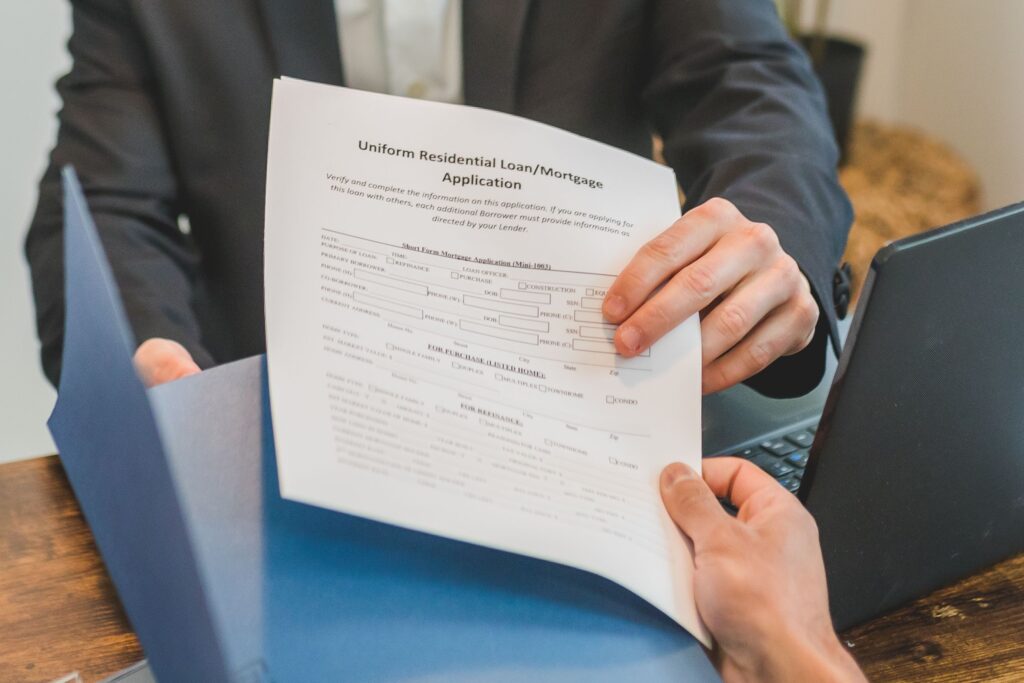
The episode hangs on some questionable numbers: 15 units, $200,000 in equity, a $15/hour job. But listen to how that equity got made. On his four-plex, one appraiser (his mentor) told him it “ain’t worth but 260 or 270.” Britton didn’t like that answer, so he got “a friend” to reappraise it at $322,000, “closer to what I thought it would be worth.” Then he pulled out $212,000 in a single cash-out refinance.
Sit with that. A big chunk of the celebrated “$200,000 in equity” isn’t money the market handed him. It’s a number a friend wrote down, that he then borrowed against.
“I built $200k in equity” and “I got friendly appraisals and borrowed against them” are not the same story.
That works beautifully while prices continue to rise. It’s exactly how people get wiped out when they don’t. And how many friends do you or I have that we can call when we want a better appraisal?
Why constant refinancing is the real risk here
What keeps the machine spinning is that he never stops borrowing. He isn’t paying these properties off, he’s pulling cash out of each one to buy the next, on commercial balloon loans that force a refinance every few years.
He did all of this at 8% interest, which tells you it was never cheap money carrying him. It was a cheap market that kept appreciating and appraisals that kept obliging. Both of those can stop.
When values stall or credit tightens and that balloon comes due, “always refinance into the next deal” isn’t a strategy, it’s a margin call. The people being told to copy this today are not starting where he started.
| Figure from the episode | What was said |
|---|---|
| First appraisal on the fourplex | 260 or 270, per his mentor |
| Reappraisal by a friend | $322,000 |
| Cash pulled out in one refinance | $212,000 |
| Equity credited to him in the episode | $200,000 |
| Duplex prices in his market | $70,000 |
The advantages they edited out
The episode frames Britton as proof that anyone can do this with nothing but a job and the nerve to act. But scattered through his own words are advantages most people in poverty will never have.
Four of them show up in his own account.
- His mom is a vice president at a local bank. That is how he got his mentor, and it is the backdrop to the engine here: small community banks repeatedly handing commercial loans to a teenager with a few thousand dollars to his name. If you have ever been broke, you know banks do not treat you that way.
- A fallback job at his dad’s fencing company. A floor under him if the properties went sideways.
- A market where duplexes cost $70,000. That math does not exist in most of the country.
- A millionaire who lent him a down payment. On one deal he borrowed the whole thing from someone in a paid online “community,” then told his banker “yes” when asked if he had it.
None of that makes him a villain. It makes him a young man with a safety net, cheap real estate, and family banking connections. What it doesn’t make him is a template.
I cannot believe their takeaway: “just start” is actually cruel
This is survivorship bias as a master class. We hear from the kid whose sight-unseen, borrow-the-down-payment gamble paid off. We never hear from the dozens who ran the same play and lost the house.
The host even admits there are “tons of people who maybe made similar mistakes but did not buy good enough deals” and that you “could lose it all.” Then the show ends on “you just need to start” anyway.
He was leaning on his parents before a single deal, and he would continue to do so. Is that a risk that you or I could take?
Who actually absorbs the downside
The downside isn’t shared equally. Britton is 23, no kids, a banker mom and a family job behind him; a blow-up wouldn’t end him. I’d question the wage, too, and I’d question the financing behind the first few purchases. I think his parents helped more than he is letting on.
The single parent on a job site who hears “take massive action” and buys sight-unseen has no company-owning dad or VP Banker mom to go back to. When it fails, and for most people copying this, it will, they’ll have thrown away so much time and money and credit, and set themselves back further. And then they’ll probably blame themselves. “A teenager did it, why couldn’t I?”
We were sold a fairy tale by people who profit from selling fairy tales: mentor classes, “communities,” Pro memberships, the whole funnel the episode links to in the ads.
What it is like actually starting with nothing

I’m not anti-real-estate. I climbed out of real poverty with it. But I was the kind of broke this episode only cosplays.
For about 13 months, my home was a van. Before that I was in and out of rented rooms, my parents’ house when they’d allow it, couch surfing, and the back of a truck for months.
I snuck into apartment buildings to use their laundry. I showered at the gym. I ran into a grocery store or gas station before bed so I could use a restroom.
Where my own portfolio actually started
Then a big move and about a year of renting.
Then my whole “portfolio” began with one sub-800sqft starter home in an okay neighborhood (for $185,000, which I could only buy because I qualified for down-payment help from the county).
Sit with that number. For the $185,000 it took me to buy a tiny house just to live in, Britton bought an entire income-producing triplex-plus-cottage in Kentucky. That is a difference in zip code and starting point, rather than in grit.
Born on 3rd base, telling us how to hit a triple.
I lived in that starter home for three years before I bought the duplex I’m in now, the one with an Airbnb basement that brings in $20,000 to $30,000 a year between the two units. So from the van to that duplex took the better part of five years of struggling and sacrifice, not a four-year highlight reel with the safety net of well set up parents.
And the down payment that started it didn’t come from a millionaire I met in a paid community. It came from a public first-time-buyer program, a real, boring, unglamorous tool nobody sells a $500 course on.
The difference is that if his first deal ended with a major loss, he would just laugh it off and keep going.
That’s the difference. Getting out took luck, hard work, juggling multiple priorities, deep thought about where to go next, parting with small hard-earned savings, public programs built for people without backstops. Equity you borrowed against isn’t wealth you’ve earned. “Take action” without a plan or any idea what you’re getting into isn’t bravery, it’s how broke people stay broke!
If your starting point is poverty, you will have to take risks to get out of poverty, but you probably don’t have the luxury of gambling like someone with a safety net like Britton. They make it sound appealing on Bigger Pockets, I’d argue, simply to sell you a fantasy underpinned by systemic advantages that most of us don’t have…
Episode referenced: BiggerPockets Real Estate Podcast, “I Bought 15 Rental Units While Making $15/Hour Putting Up Fences,” host Henry Washington and guest Britton Eads. All quotes are from the published episode transcript.
- If you’re still sorting out the fundamentals, start with what house hacking actually is.
- If it was the calculators that pulled you into the BiggerPockets ecosystem, our free BiggerPockets calculator alternative covers what you can run without the membership.
- If the bigger question on your mind is whether the whole field is a con, I wrote a longer answer in is real estate investing a scam.
Get started with the newsletter!
Useful, relevant analysis, tools, tricks, and what you need to know on the journey to financial freedom. From the van years to a duplex, the plain math and none of the hype.
Subscribe and get the free $0-to-First-Property Roadmap to start.
No spam. Unsubscribe in one click.
Want the deeper toolkit? The guides and spreadsheets are in the shop, from $5, and the free tools stay free either way.
Sources
- BiggerPockets Real Estate Podcast, I Bought 15 Rental Units While Making $15/Hour Putting Up Fences. The published episode page. Every quote and figure above comes from this episode and its transcript.
- Consumer Financial Protection Bureau, Why did I receive different valuations during the mortgage loan application process? The agency explanation of why two valuations on one property come back different, which is the mechanism behind the reappraisal in this story.
- Consumer Financial Protection Bureau, What is a balloon payment? When is one allowed? What comes due at the end of the loan structure that forces the refinance every few years.
- U.S. Department of Housing and Urban Development, Buying a Home. The starting point for the state and local down payment programs I used, the unglamorous route nobody sells a course on.
Frequently asked questions
Can you really buy 15 rental units on a $15/hour wage?
Survivorship bias is defined as drawing a general rule from the person who happened to win while never hearing from everyone who ran the same play and lost. That is what this episode is. Much of the celebrated $200,000 in equity came from a friendly reappraisal at $322,000 and a $212,000 cash-out refinance rather than from the wage in the title.
What is a cash-out refinance and why is it risky?
A cash-out refinance is defined as a new and larger loan that replaces the old one and hands you the difference in cash, with the amount available set by the appraised value. It gets risky when the plan depends on prices continuing to rise, because a stalled market and a balloon payment arriving in the same year leave nothing to refinance into.
Does a higher appraisal mean a property is worth more?
An appraisal is defined as one appraiser opinion of value written down, not a fact about the building. Two looks at the same fourplex in this story landed far apart, at 260 or 270 from the first appraiser and $322,000 from a friend, which is why a number you borrowed against is not the same thing as wealth you earned.
How do you buy a first property with no safety net?
Buying without a safety net is defined as buying where a failed deal has no family backstop to absorb it, so the plan has to be deliberately boring. Mine was a starter home under 800 square feet for $185,000, bought with county down payment help, and it took the better part of five years to get from the van to the duplex.
Run a building through the math instead of guessing at it.
The free house hacking calculator. Put in a price, a rent and your loan terms, and it returns your real monthly cost in a few seconds.