
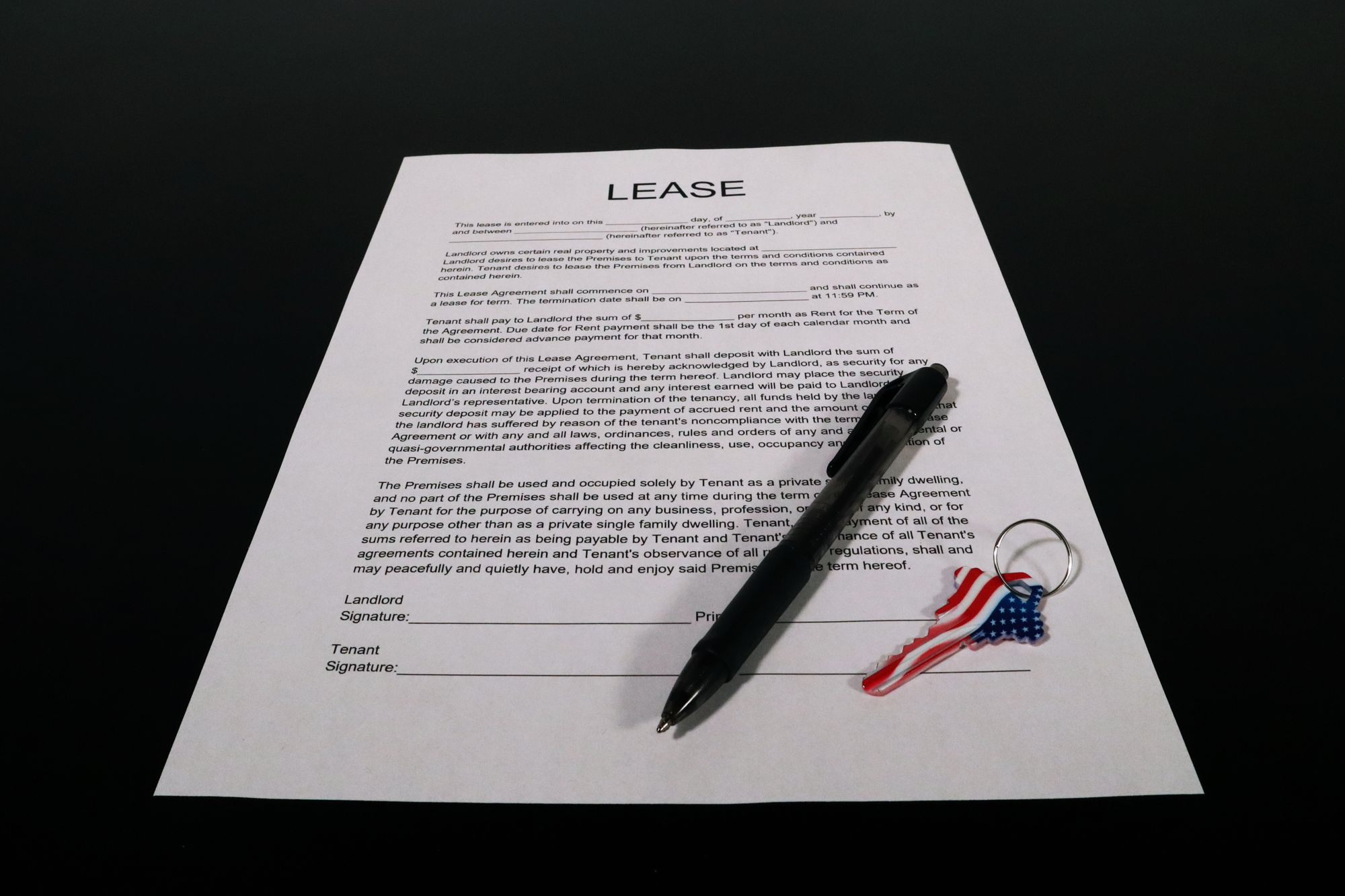
Self-managing a rental property is defined as handling the listing, screening, lease, rent collection, maintenance calls and records yourself instead of paying a manager. A manager typically takes 8% to 12% of the rent every month plus up to a month’s rent per new lease. On a house hack where you already live in the building, that fee buys very little.
Most advice about property managers is written for people who own buildings across town or across the country. A house hacker lives on the other side of a wall from the only tenant. The question is different: what does a manager do for you that you are not already positioned to do, and what does that cost against a rent that is covering your mortgage? This post is the version of that question for a first building.
What a property manager costs on a small building
The going rate: for single-family homes and two- to four-unit buildings, managers charge 8% to 12% of collected rent each month, according to All Property Management, a directory that sells manager referrals. On top of that, most charge a tenant placement fee of 50% to 100% of a month’s rent every time a unit turns over, and many add a renewal fee.
Short-term rentals cost more to hand off. The same guide puts short-term rental management at 20% to 40% of income, because someone has to answer messages and turn the unit over between guests.
On a building you live in, the fee buys the one thing you already have: being there.The case for self-managing a house hack, in a sentence.
On my duplex the upstairs unit rents for about $1,200. At 10%, a manager would take about $120 a month, and about $1,200 more the first time the unit turned over. The Airbnb basement paid out about $11,900 in its first year; a manager at 25% would have taken about $2,974 of that. Here is the first year at typical rates.
| Line | Typical rate | On my building, year one |
|---|---|---|
| Monthly management, long-term unit | 10% of about $1,100 rent | $1,320 |
| Tenant placement, one new lease | One month’s rent | $1,100 |
| Short-term rental management | 25% of about $11,900 in payouts | $2,974 |
| Total | About $5,400 |
My share of the mortgage payment that year, after rent and payouts, was about $789 a month. A $5,400 management bill would have added about $450 a month to that, taking my share from under $800 a month to over $1,200, roughly. The ledger behind those figures is in how much the tenants covered.

What self-managing a rental involves, task by task
The job is a short list of tasks that repeat on very different schedules. Once a year or less: list, screen, sign. Every month: collect, record. Whenever: fix. Here is what each one takes on a house hack.
- Listing the unit. Photos, a rent figure and a posting on the free listing sites. Price it from comparable listings, not from what you need; the rent comp worksheet is built for that. A few hours, once per vacancy.
- Screening applicants. The same questions, the same credit and background check, the same criteria for every applicant, in writing. The FTC’s guidance for landlords covers what you must do if you turn someone down based on a report. I wrote up the full process in what I wish someone told me before my first rental.
- The lease. Use your state’s standard form or a local attorney’s, not a template from a forum. Add the federal lead paint disclosure if the building was built before 1978; mine was.
- Collecting rent. Electronic transfer on a fixed date, into an account that only the building uses. Five minutes a month if it works, a hard conversation if it does not. The apps are compared in best rent collection apps for small landlords.
- Repairs. Know a plumber, an electrician and an HVAC tech before you need them. Your job is dispatch and payment, not the repair itself, unless you can do it.
- Records. Every dollar in and out, with a receipt, in one place. This is what makes the tax deductions real at filing time.
How it went for me: the upstairs unit was empty at closing. I listed it, screened the applicants and had a signed lease within a few weeks, and the tenant paid twelve months on time with no vacancy. I clean most Airbnb turnovers myself, and the messages and check-ins are the largest cost of that unit, in time rather than cash.
The rules a self-managing landlord has to know
A manager’s most defensible value is that they know the rules. You can know them too. The short list for a first building:
- Fair housing. The Fair Housing Act bars discrimination based on race, color, national origin, religion, sex, familial status and disability. Many states and cities add more classes. The practical defense is a written set of criteria applied identically to everyone.
- Screening reports. If you deny an applicant, or ask for a bigger deposit, based on a credit or background report, federal law requires you to tell them and name the reporting company. The FTC’s landlord guide spells out the notice.
- Lead paint. Pre-1978 buildings require the EPA disclosure form and pamphlet before a lease is signed.
- Security deposits and notice periods. These are state law: how much you can hold, where it must be kept, how many days you have to return it, and how much notice a rent increase or entry requires. Look up your state before the first lease, not after the first dispute.
None of this is hard. It is the kind of thing you read once, write into your own checklist, and follow every time. The lived-in part of the job, being reachable without being on call, is a separate skill I covered in living next to your tenants.
When hiring a property manager makes sense
The exceptions: self-managing is the default for a house hack, but there are cases where paying the fee is the better trade.
- You are moving out and keeping the building. Once you are not on site, the fee buys the drive-bys and the local contractor list you no longer have. Many house hackers hire a manager for building one when they move into building two.
- The short-term unit is eating your evenings. If the messages and turnovers are costing hours you need for work or family, a co-host at 20% may return more than it takes. Model both in short-term vs. long-term rental.
- You will not enforce the lease. Some people cannot ask a neighbor for late rent. If that is you, know it now; a manager is cheaper than a year of unpaid rent.
- The building is bigger than you thought. A fourplex with three tenants and a shared laundry is a different job than a duplex. The fee scales with rent, but the tasks scale with doors.
The way to decide is to price it. Run the building with a 10% management line and without one, and look at what the fee does to your monthly gap. On a duplex where you live downstairs, that line usually costs more than it saves. On a building you have left, it often does not. How the strategy fits together is in what is house hacking.
Next step
Put a listing into the free house hacking calculator twice, once with a 10% management expense and once without, and compare your share of the payment. That difference is what self-managing pays you each month. No signup, no email wall.
Frequently asked questions
Is it worth self-managing a rental property?
Self-managing is worth it when the fee saved exceeds the value of the hours it takes, which is usually the case for an owner who lives in the building. On a $1,200 unit a manager takes about $120 a month plus a month’s rent per new lease, for tasks that mostly happen once a year.
How much does a property manager cost for a duplex?
A property manager for a duplex costs 8% to 12% of the collected rent each month, plus a tenant placement fee of 50% to 100% of one month’s rent per new lease, according to industry fee guides. Short-term rental management runs 20% to 40% of income.
What does a self-managing landlord have to do?
A self-managing landlord is defined as the person who lists the unit, screens applicants, signs the lease, collects rent, dispatches repairs and keeps the records. On a house hack the yearly tasks take a few hours each, rent collection takes minutes a month, and repairs take whatever the building demands.
Can you self-manage a rental with no experience?
Yes. Self-managing with no experience is defined as learning the fair housing rules, the screening-notice rules, the lead disclosure and your state’s deposit and notice laws before the first lease, then following a written checklist every time. Most first house hacks are self-managed from day one.
Sources
- All Property Management, How Much Do Property Managers Charge? (8% to 12% monthly on single-family and 2-4 unit properties; placement fees of 50% to 100% of one month’s rent; short-term rental management 20% to 40%). Industry source: a directory that earns referral fees from property managers. allpropertymanagement.com. Read September 2026.
- Federal Trade Commission, Using Consumer Reports: What Landlords Need to Know. ftc.gov.
- U.S. Department of Housing and Urban Development, Housing Discrimination Under the Fair Housing Act (protected classes). hud.gov.
- U.S. Environmental Protection Agency, Real Estate Disclosures about Potential Lead Hazards (pre-1978 housing). epa.gov.
- Rent, payout and payment figures are from my own lease, Airbnb payout statements and mortgage statements, rounded; the management-fee lines are estimates at the typical rates above, not bills I paid.
If you want the next post as it lands, the blog page has the subscribe box. If you are deciding whether to hire a manager for a specific building, send me the numbers and I will run it both ways with you.
Get started with the newsletter!
Useful, relevant analysis, tools, tricks, and what you need to know on the journey to financial freedom. From the van years to a duplex, the plain math and none of the hype.
Subscribe and get the free $0-to-First-Property Roadmap to start.
No spam. Unsubscribe in one click.
Want the deeper toolkit? The guides and spreadsheets are in the shop, from $5, and the free tools stay free either way.