

To buy a duplex and live in one side, you use an owner-occupant mortgage (FHA allows 3.5% down on up to four units), move into one unit for at least a year, and rent the other. In most affordable metros the second unit rent covers 50 to 100 percent of the monthly payment.
Disclosure: some links in this post are affiliate links. If you open an account through them, VanToVault earns a commission at no extra cost to you. I only recommend tools I think are genuinely worth your money.
The step-by-step version of the most reliable first move in real estate: buying a two-unit home, living in half, and letting a tenant cover most of your payment.
Why a duplex is the cleanest entry point
Buying a duplex and renting the other unit is the cleanest entry point into real estate I know of, and it’s the move that changed my own finances. You live in one side, a tenant lives in the other, and their rent covers a large share of your mortgage.
You end up owning a real asset while paying far less than you would to rent, and you learn how being a landlord works on the easiest possible setting, with your tenant fifteen feet away.
How I did it
I did exactly this. After about thirteen months living in a van, then a small starter home, eventually I bought a $470,000 duplex, lived on one side, and rented the other. This post is the practical how-to, start to finish.
If you want the concept first, read What Is House Hacking? Then come back here for the steps.
Why buy a duplex instead of a single-family home
A duplex uses the same owner-occupied loans as a regular home, including FHA at 3.5 percent down, and adds a built-in rental unit.
A duplex hits a sweet spot. It’s still bought with the same loans and low down payments available to regular homebuyers, because you’re going to live there, but it comes with a built-in rental unit. That combination is what makes the math work.
How owner-occupied financing works on a duplex
The key advantage is the loan. When you live in the property, you can use owner-occupied financing instead of the more expensive investor loans. An FHA loan lets you buy a one-to-four-unit home with as little as 3.5 percent down, according to the U.S. Department of Housing and Urban Development, as long as you live in one of the units. On a duplex, that’s a fraction of what an investor would need to put down on the same building. I’ve written a full breakdown of that loan here: FHA House Hacking With 3.5% Down.
One useful thing to know: for a duplex, the FHA has no special income hurdle beyond normal qualifying. It’s only on three- and four-unit properties that the FHA adds a “self-sufficiency test” requiring the rent to cover the whole payment. Duplexes skip that, which is one more reason they’re the friendliest starting point.
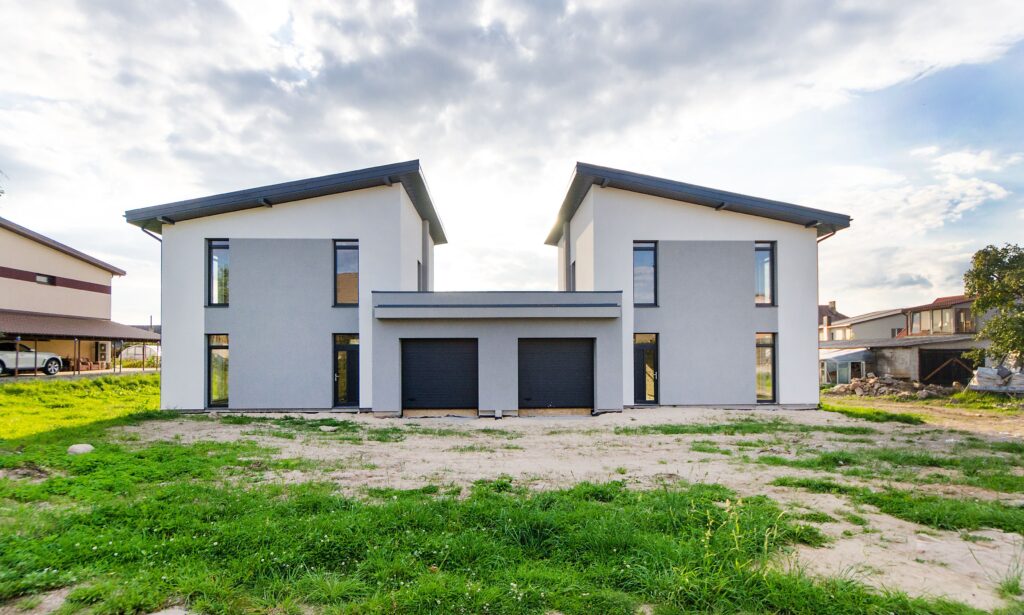
Step one: get pre-approved
Get pre-approved before viewing listings, because credit, documented income and savings decide your real budget and are the slowest things to fix.
Before you look at a single listing, find out where you stand with a lender. Three things decide it: your credit, your documented income, and your savings. Credit and income are usually the real gatekeepers, not the down payment, so get them in view early because they’re the slowest to fix.
Find a lender who has closed these loans
Get pre-approved with a lender who has actually done FHA and first-time-buyer loans. That pre-approval tells you your real budget and makes your offers credible. If you’re not sure you’re ready, the readiness roadmap tool walks through your credit, income, and savings and tells you which lever to pull first.
FHA is not the only low-down-payment loan on a two-unit building, and the alternatives are worth ten minutes of your time before you pick a lender. Here is what an owner-occupant can actually use on a duplex.
| Loan | Down payment | Credit score | The catch |
|---|---|---|---|
| FHA | 3.5% | 580 or above. A score of 500 to 579 caps you at 90% of the price, so 10% down | You must live in one unit for at least a year. Mortgage insurance generally runs for the life of the loan |
| Conventional (Fannie Mae) | 5% | Fannie Mae sets no minimum for an automated (DU) approval, 620 if manually underwritten; on a 2-4 unit the mortgage insurer sets the floor (MGIC: 600 for a 2-unit, 660 for a 3-4 unit with an automated approval) | Mortgage insurance until you reach 20% equity, then it comes off. Tighter credit standards than FHA |
| VA | $0 | Set by the lender, not by VA | Only for qualifying veterans and service members. You must live in the home |
| FHA 203(k) | 3.5% | Same as FHA | Rolls repair costs into the purchase loan. The home must be at least a year old, and the paperwork and timeline are heavier |
What a 203(k) loan lets you do
A word on that last row, because it matters in the affordable metros I write about. A 203(k) loan lets you finance the purchase and the rehabilitation in one mortgage, with the repair money held in escrow until the work is done. Two-to-four-family buildings qualify. If the duplexes in your price range all need a roof or a furnace, this is the loan that makes them buyable instead of a reason to walk away.
Here is the part worth knowing before you talk to a lender: the rent from the other unit can help you qualify, before you have ever collected a dollar of it.
On an FHA loan the lender will count 75 percent of the other unit’s rent toward your income. The missing 25 percent is their allowance for vacancy and maintenance. On a duplex where the second unit rents for $1,200, that is $900 a month of income added to your file. For a lot of buyers that is the difference between qualifying and not.
Conventional loans are stricter, and this is where most house hacking advice goes wrong. Fannie Mae also counts 75 percent of the rent, but unless you have 12 months of rental property management experience, that rent can only offset the property’s own payment (PITIA); it cannot be added to your income. That rule has applied to every Fannie loan since January 1, 2024.
You do not need a signed tenant
The appraiser fills out a form estimating fair market rent for the unit, and the lender uses 75 percent of the lower of that estimate or an actual lease if one exists. Ask your lender to run your numbers both ways so you can see what it does to your budget.
Step two: find down payment assistance for duplexes
As of July 2026 there were 2,746 homebuyer assistance programs nationwide, and 962 of them allowed two-to-four-unit properties like the one you want.
You may not have to save the entire down payment alone. As of July 2026 there were 2,746 homebuyer assistance programs nationwide, according to Down Payment Resource, and 962 of them allowed the purchase of two-to-four-unit properties, exactly the kind of building you’re after. I used a county first-time-buyer program to get into my first home, a $185,000 starter I never could have bought otherwise.
Where to find assistance programs
These programs are poorly advertised, so search your state housing finance agency and your county along with “first-time homebuyer assistance,” and ask your lender which ones you might qualify for. It’s worth an afternoon.
Step three: find duplexes worth analyzing
Filter listing sites for two to four units, widen your search radius, and hire an agent who has closed a two-to-four-unit deal.
Duplexes are not evenly distributed. They cluster in older neighborhoods and in cities whose zoning has always allowed two-family homes, and they are scarce in newer suburbs. Your realistic search area may be smaller than the metro you live in, so find out where the stock actually is before you fall in love with a neighborhood that has none.
How to filter the listing sites
On the major listing sites, filter for multi-family or set the property type to 2 to 4 units. Inventory is thin, so widen your radius rather than waiting for something perfect to appear on your street. Set up alerts, because good two-unit listings move fast and the buyers competing with you are often investors who can act the same day.
Get an agent who has closed a two-to-four-unit deal before. This is a real filter, not a formality. An agent who only sells single-family homes will not think to ask for the current leases, the rent roll, or the seller’s utility bills, and those three documents are most of what you need to know whether the building works.
Step four: run the PITI and rent numbers
Compare PITI against the other unit’s realistic rent before you get attached. On my duplex, PITI runs about $2,880 and the tenant pays about $1,200.
This is the easiest place to go wrong: finding a duplex you like and then talking yourself into the numbers. Do it the other way around.
What to work out before you get attached
For any duplex you’re considering, you want to know what your actual monthly cost will be after the other unit’s rent comes in. Your payment is usually called PITI: principal, interest, taxes, and insurance. On my duplex, PITI runs about $2,880 a month. The upstairs tenant pays around $1,200, and a basement short-term rental covers more on top of that, which dropped my own out-of-pocket cost to a fraction of the payment.
How much of the payment the rent needs to cover
You don’t need the rent to cover 100 percent of the payment for a duplex to be a great deal. You just need your share to beat what you’d otherwise pay in rent. Run every candidate through the free house hacking calculator with the price, the realistic rent for the other unit, and your loan terms. To get realistic rent, look at what similar units nearby actually lease for rather than guessing. For a deeper walk through the math, I broke down a real example here: The Duplex Math, Line by Line.
Get an insurance quote, not an estimate
One line inside PITI is easy to guess at and should not be: insurance. Get a real quote on the actual address before you are under contract rather than plugging in a round number. It is part of your monthly payment, it varies more than people expect between buildings, and finding out late is an unpleasant way to lose a few hundred dollars of margin.
Step five: make the offer and get through closing
Offer at the price your analysis supports, get a real inspection, and expect a few thousand dollars in closing costs and an emergency buffer.
Once the numbers work, make your offer at a price the analysis supports, not the one that makes the seller happiest. Get a real inspection, because in a duplex you’re buying two of many things: two kitchens, sometimes two furnaces, more plumbing and roof to fail. Budget for that reality.
Expect a few thousand dollars in closing costs, inspection fees, and an emergency buffer beyond the down payment. You want cash left over after you close, not a bank account scraped to zero.
Step six: screen tenants and follow landlord-tenant law
Keep a good tenant paying fair rent in a maintained unit, follow your state’s lease and notice rules, and separate the building’s money.
What the job looks like after you close
After you close, your job is to keep a good tenant paying fair rent in a well-maintained unit. Screen tenants properly, respond to repairs, and follow your state’s rules on leases and notices. Living next door makes this easier in some ways and more personal in others; I wrote about that here: What It’s Like Living Next to Your Tenants.
A duplex is the most beginner-friendly real estate purchase because it uses cheap owner-occupied financing and comes with a tenant who pays down your loan.
One practical move for the first week
One practical move for that first week: open a separate account for the building before the first rent check arrives, so the rent, the maintenance share and the repair buffer never mix with your personal checking. A second account at your own bank works, and Baselane is a solid option built specifically for landlords. I keep my own books in spreadsheets, so treat that as a recommendation and not a review.
Then you let time do the work. The tenant helps pay down your loan every month, the property tends to appreciate, and your own housing cost stays low. That combination is the quiet engine that builds equity.
How the tax side works when you live in half
The IRS splits your building into a home half and a rental half, usually by square footage, and the rental portion depreciates over 27.5 years.
This is the part of a duplex that a single-family home does not have, and it is worth understanding before your first April rather than after it. I am not a CPA and this is not tax advice. What follows is the shape of the rules, straight from IRS Publication 527, so you know what to ask a preparer.
How the building splits into two halves
The core idea is that your building is two things at once. The half you live in is a home. The half you rent is a rental property. The IRS makes you split the building between those two uses and treat each part under its own rules.
Splitting the expenses
Anything that covers the whole property gets divided between the personal half and the rental half by a reasonable method, usually square footage. The rental share of your mortgage interest, property taxes, insurance, water bill and roof repair becomes a rental expense. The personal share follows the ordinary homeowner rules. Anything spent only on the rental unit, like repainting it between tenants, belongs entirely to the rental side.
Depreciation on the rental half
Depreciation. This is the piece that is easiest to miss. The IRS treats the rental portion of the building as an asset that wears out, and lets you deduct a slice of its value every year over 27.5 years. You do not spend anything to get that deduction. It comes off your rental income on paper. Land is not depreciated, only the building.
What that adds up to
Between the rental share of your interest and taxes, the actual costs of running the unit, and depreciation, the rental half of a duplex often shows a much smaller taxable profit than the rent you collected would suggest. That is normal and it is the intended design of the rules.
Two cautions
Two cautions. Depreciation is recaptured when you sell, meaning the deductions you took come back into the calculation at that point, so this is partly a timing benefit rather than a permanent one. And losses from rental property can be limited depending on your income. Both of those are real enough that a preparer who has handled an owner-occupied duplex before is worth paying for in year one. Publication 527 is free and readable if you want the full version.
To keep that split straight from the first month, I built a House Hacker Budget and Tax Planner in Google Sheets ($19 on Etsy). It divides shared bills by unit and sorts the rental side by Schedule E line, so tax season starts with the numbers already organized. It is a planning worksheet, not tax advice.

How higher mortgage rates change the duplex numbers
Higher rates make the monthly numbers tighter and kill some deals, so run the numbers at today’s rates and move only where the math works.
I locked a rate under 4 percent when I bought. Rates are higher now, which makes the monthly numbers tighter, and in some areas the FHA self-sufficiency rules or high prices will make a given deal not work. That’s fine. The process above still holds; you just have to run the numbers at today’s rates and only move on a property where the math actually works. Some won’t. The right one will.
What a duplex house hack costs each month
PITI of about $2,880 a month against roughly $1,200 in upstairs rent plus a basement short-term rental leaves me paying a fraction of the payment.
| Line | My duplex |
|---|---|
| PITI, the full payment | About $2,880 a month |
| Upstairs tenant rent | About $1,200 a month |
| Finished basement, short-term rental | Varies by month, on top of the roughly $1,200 |
| What I actually pay | A few hundred dollars a month |
| What renting a comparable place would cost | Over $1,500 a month more |
Figures are approximate; the ledger posts carry the exact numbers.
Your numbers will differ. Run any address through the free house hacking calculator to see the same five lines for a duplex you are looking at. That fourth line, what you actually pay after the tenant’s rent, is your effective housing cost, and it is the one number that decides whether a house hack beats renting.
Qualify first, find your down payment help, analyze every deal before you get attached, close with cash to spare, and then be a steady landlord. Do that and you own an appreciating asset while paying a fraction of what renting would cost.
What the duplex compares against
A duplex is not the only structure either. See how it compares to renting by the room or adding an ADU in house hacking strategies.
Can you buy a duplex and live in one side?
Yes. If you live in one of the units it counts as owner-occupied, and that is what lets you use low-down-payment homeowner loans on a two-unit property instead of a larger investor down payment.
How much do you need down to buy a duplex you live in?
As an owner-occupant you can use an FHA loan on a 2 to 4 unit property with as little as 3.5% down, or a conventional owner-occupied loan around 5%. Lenders can also count part of the other unit’s rent toward helping you qualify.
Is house hacking a duplex worth it?
The rent from the other unit goes straight against your mortgage, so your out-of-pocket housing cost drops, sometimes to near nothing. You take on being a landlord next door, but it is one of the cheapest ways to buy your first place and start building equity.
What credit score do you need to buy a duplex?
For an FHA loan, 580 gets you the 3.5% down payment. Between 500 and 579 you can still get an FHA loan but you will need 10% down. Below 500 you are not eligible. For a conventional loan at 5% down on a two-unit, Fannie Mae sets no minimum score on an automated approval (620 if manually underwritten); the mortgage insurer sets the floor, and MGIC’s is 600 for a two-unit with an automated approval.
Can you use the rent from the other unit to qualify for the loan?
Yes, on an FHA loan. The lender counts 75 percent of the other unit’s rent as income, holding back 25 percent for vacancy and maintenance. On a conventional loan that 75 percent is reduced by the property’s full payment first, and it only counts as income if you have 12 months of landlord experience. You do not need a signed lease first. The appraiser estimates fair market rent and the lender works from that.
Can you buy a duplex with no money down?
If you qualify for a VA loan, yes. VA allows zero down on a property of up to four units as long as you live in one of them. Outside of VA, the realistic floor is 3.5% with FHA, and down payment assistance can cover part or all of that. As of July 2026 there were 962 programs nationwide that allowed two-to-four-unit purchases.
Do you have to pay tax on the rent from the other unit?
The rent is income, but you deduct the rental share of your expenses against it, including mortgage interest, property taxes, insurance, repairs, and depreciation on the rental portion of the building over 27.5 years. What is left after those deductions is what gets taxed. IRS Publication 527 covers how to split a property you live in and rent at the same time.
What changed since I first wrote this
One thing changed since I first wrote this. A federal law passed in July 2026 will bar companies holding 350 or more homes from buying buildings with two or fewer units, which includes duplexes, starting January 7, 2027.[S1] I went through what it covers and what it leaves open in the ROAD Act investor ban and why it covers duplexes.
The day you hand over the keys you stop being a buyer and start being a landlord, and the two jobs need different tools. Rent has to arrive on a schedule, maintenance requests need a paper trail, and the lease has to be signed and findable a year later. Innago is a solid option built for small landlords and handles all three, free on the landlord side.
Keep going
If you have not found the property yet, how to find a house hack property covers the listing filters and the five-minute screen I run before touring anything.
Step two is the one that varies most by metro. I checked all 83 metros I cover for assistance an owner occupant can use on a duplex and recorded the answer for each one in the down payment assistance survey.
Before you commit to the duplex, it is worth weighing it directly against the simpler option: duplex or single family starter home, and the numbers that decide it.
See what this looks like on a building you could actually buy.
The free house hacking calculator. Put in a price, a rent and your loan terms, and it returns your monthly cost with the tenant rent counted.
Next step
This page is the arithmetic. The First-Property Bundle is the version you run on your own market: the five-stage playbook with a worked duplex example, a six-calculator workbook, and a 15-minute workflow for finding the down payment assistance in your own county. Pay what you want, $5 minimum, and the free tools on this site stay free either way.
Get the bundle, from $5Keep reading: how long you have to live in a house hack, VA loans on a duplex to fourplex, renting by the room versus renting a unit and multigenerational living in a 2-4 unit home.
Sources & Methodology
- FHA Loans, U.S. Department of Housing and Urban Development
- FHA Self-Sufficiency Test for 3- and 4-Unit Properties, Mortgage Research Center
- Down Payment Assistance Continues to Expand in Q2 2026, Reaching 2,746 Programs Nationwide, Down Payment Resource
- Does FHA Require a Minimum Credit Score, U.S. Department of Housing and Urban Development
- Eligibility Matrix, Fannie Mae
- Rental Income (Selling Guide B3-3.8-01), Fannie Mae
- Revisions to Rental Income Policies (Mortgagee Letter 2023-17), U.S. Department of Housing and Urban Development
- VA-Backed Purchase Loan, U.S. Department of Veterans Affairs
- 203(k) Rehabilitation Mortgage Insurance Program, U.S. Department of Housing and Urban Development
- Publication 527, Residential Rental Property, Internal Revenue Service
- [S1] Van to Vault, read 24 September 2026: “The ban starts January 7, 2027, applies only to new purchases, and expires 15 years after that.” vantovault.com.
I’m not a guru, and the tools here are free. If you want more posts like this as I write them, subscribe on the blog, or if you’ve found a place and want a second pair of eyes on the numbers, send me the deal.
Methodology and sources
Methodology and sources: FHA terms (3.5 percent down, two-to-four-unit eligibility, and the self-sufficiency test) follow HUD’s FHA Single Family Housing Policy Handbook 4000.1. Down-payment-assistance program counts come from Down Payment Resource. The estimate that a second unit’s rent covers roughly 50 to 100 percent of the payment is drawn from my own 11-metro own-versus-rent analysis. Last updated: August 2026.
One rule worth knowing: Fannie Mae wants 12 months of property management experience before the rent can raise your qualifying income, and has since January 1, 2024. Without it, the rent can only offset the payment. FHA does not have that rule. It is worth reading before you pick a lender.
Get started with the newsletter!
Useful, relevant analysis, tools, tricks, and what you need to know on the journey to financial freedom. From the van years to a duplex, the plain math and none of the hype.
Subscribe and get the free $0-to-First-Property Roadmap to start.
No spam. Unsubscribe in one click.
Want the deeper toolkit? The guides and spreadsheets are in the shop, from $5, and the free tools stay free either way.