
You can split ownership any way you agree, but every person who signs the mortgage owes the whole loan[S1]. Keep the deed, the note and your agreement separate, and plan the exit first.
Published October 2026. Sources checked October 6, 2026.
| Figure | What it is | Source |
|---|---|---|
| 75% | FHA’s maximum loan-to-value with a co-borrower who will not live there | [S7] |
| 96.5% | if that co-borrower is family and the home has one unit, with exceptions | [S7] |
| 25% | down: a non-occupant co-signer on an FHA duplex, triplex or fourplex | [S7] |
| 95% | Fannie Mae’s limit with a non-occupant co-borrower and automated approval; 90% manual | [S8] |
| 15,606 | shared-equity homes in a national census published in 2023 | [S14] |
| $923.69 | each buyer’s half of the payment in the modeled example | [S25] |
| 7.28% | Freddie Mac’s 30-year average, week of October 1, 2026 | [S25] |
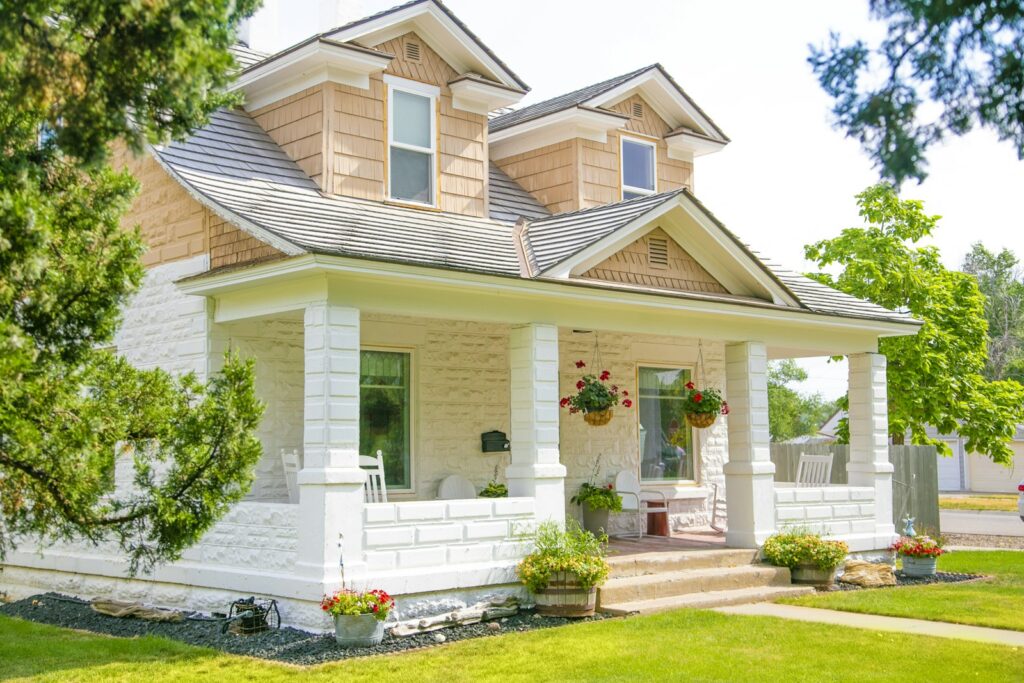
Three ledgers, kept separate
The deed says who owns what, the note says who owes the lender, and only your agreement says who lives there and pays what.
| Ledger | What it settles | Watch for |
|---|---|---|
| The deed | Tenancy in common: each owns “a specific share or percentage,” so shares can be unequal. Joint tenancy: “the right of survivorship”[S2] | A joint tenant’s share passes to the other owners, not heirs[S3]; California requires joint tenancy to be “expressly declared”[S4] |
| The note | Every signer owes all of it, whatever the deed says[S1] | Form 3200: “any one of us may be required to pay all of the amounts owed under this Note”[S1] |
| Your agreement | Who lives there and pays which bill | The monthly split, a repair reserve, and what happens if someone stops paying |
Any co-owner can usually force the issue
Is this path for you?
Co-buying can fit people who could each cover the whole payment for a while and will sign a written agreement after legal review.
It does not fit
- Anyone who could not carry the full payment alone for a stretch[S1].
- A non-occupant co-signer on an FHA 2-4 unit purchase expecting 3.5% down: it means 25%[S7].
- Anyone needing a quick exit: buyouts need a refinance or release; partition goes through court[S1][S5].
- Anyone whose estate plan conflicts with survivorship[S3].
Lender rules when one buyer will not live there
FHA allows 96.5% only for family on a one-unit home; otherwise a co-borrower who will not live there means 75%[S7].
The rule, read in HUD Handbook 4000.1, Update 18, on October 6, 2026 (PDF page 206, printed page 181)[S7]:
“For Non-Occupying Borrower Transactions, the maximum LTV is 75 percent. The LTV can be increased to a maximum of 96.5 percent if the Borrowers are Family Members, provided the transaction does not involve: a Family Member selling to a Family Member who will be a non-occupying co-Borrower; or a transaction on a two- to four-unit Property.”
| Loan and co-borrower | Maximum LTV | Note |
|---|---|---|
| FHA, family, one unit | 96.5% (3.5% down) | Not for a family member selling to a non-occupying family co-borrower[S7] |
| FHA, family, 2-4 units | 75% (25% down) | A parent co-signing a duplex they will not live in[S7] |
| FHA, non-family | 75% | Any property[S7] |
| Fannie Mae | 95% with DU; 90% manual | Manual: “the occupying borrower(s) must make the first 5% of the down payment from their own funds,” with exceptions[S8] |
| Freddie Mac (REPORTED) | 95% automated; 90% manual | Homebuyer.com’s copy of section 5103.1[S9] |
The complete cost
On the open market you split one payment you each owe in full; a shared-equity home trades a lower price for a restricted resale.
| Item | Open market | Shared-equity home (land trust or limited-equity co-op) |
|---|---|---|
| Upfront cash | Split as you agree; non-occupant: FHA 25% (family, one unit 3.5%)[S7]; conventional 5% DU, 10% manual[S8] | Set by each program; restricted price[S10] |
| Monthly cost | One payment each signer can owe in full[S1] | Mortgage plus any land lease or co-op charges[S11] |
| Security | Shared title; partition possible[S5] | Land trust: own the building, lease the land, typically 99 years[S11]; co-op: own a share[S12] |
| Verify locally | Title and partition (attorney); loan limits (loan officer) | Programs near you, and lenders that finance them[S11] |
| Exit | Sale, buyout with refinance or release, or partition[S1][S5] | Formula resale price[S13]; co-op members may vote away affordability[S12] |
Shared-equity homeownership
Here you buy at a lower price and agree to resell at a restricted price[S10].
- Land trust: “purchasers own the building (or attached unit) and lease the land from the CLT”[S11].
- Limited-equity co-op: residents buy “a share in a development (rather than an individual unit)” and resell at a formula price[S12].
Three resale formulas, per the National Housing Conference[S13]:
- Appraisal-based: tied to the home’s market value.
- Index-based: tied to the consumer price index or area median income.
- Affordable-housing-cost: what a target family can afford.
National census published in 2023; no national count of limited-equity co-ops found.
What the 2026 law changes
The ROAD to Housing Act (Public Law 119-101), enacted July 11, 2026, rewrote parts of HOME, which funds some local homebuyer programs[S15].
- Sec. 501: HOME homeownership can serve families up to 100% of area median income, and the law names “a shared equity ownership model, a community land trust, a limited equity cooperative”[S16].
- Timing: unknown locally; ask your city or county.
How common is co-buying?
Every figure below is REPORTED by a survey sponsor, and they measure different things, so do not add them together.
| Figure | Who was asked | Sponsor |
|---|---|---|
| 4% bought with a friend; 4% with a non-spouse relative | U.S. homeowners, YouGov, April 2024 | Bankrate[S17] |
| 6% of buyers were unmarried couples | Buyers, July 2024 to June 2025 | National Association of Realtors[S18] |
| 37% plan to buy with someone other than a spouse or partner | 1,207 prospective buyers; year not stated | U.S. News World Report[S19] |
| 71% would consider co-buying | 1,014 adults, September 2026 | Neighbors Bank, a lender[S20] |

Planning the way out
Plan the exit before you buy, and take this list to a local real-estate attorney.
Your list for the attorney
- Money: shares and how they relate to contributions, the monthly split, a repair reserve, credit for improvements[S21].
- Default: who covers a missed payment, and whether it is repaid or becomes equity.
- Buyout: value, timeline, refinance or release, a right of first refusal[S21], and how a co-owner can cash out or move out[S22].
- Death and incapacity, matched to your title form and wills[S21].
- Disputes, and rent if only one owner lives there.
Topics from two law firms, Bay Legal PC and Brooks, Tarulis Tibble; no legal-aid checklist we found covers them all.
| Question | Answer | Source |
|---|---|---|
| Does a buyout free the person leaving from the loan? | No, unless the loan is refinanced or the lender releases them | [S1] |
| Which transfers escape a due-on-sale clause? | 12 USC 1701j-3(d) lists some, such as a joint tenant’s death, on loans under five units | [S23] |
| Is a living co-owner’s buyout on that list? | Not in our reading; ask an attorney and a lender | [S23] |
| How do we split the interest deduction? | Each deducts their own share; the one not on Form 1098 attaches “a statement to your paper return” (IRS Publication 936) | [S24] |
Modeled example: a 60/40 down payment, equal monthly payments
After 5 years neither split returns exactly what each buyer put in.
| Input | Value | Basis |
|---|---|---|
| Price | $300,000 | Assumption |
| Down payment | $30,000: Buyer A $18,000 (60%), Buyer B $12,000 (40%) | Assumption |
| Loan | $270,000, 30-year fixed at 7.28% | Freddie Mac rate[S25] |
| Payments and sale | Split equally; sold after 5 years at the $300,000 price | Assumptions |
- Monthly rate: 7.28% ÷ 12 = 0.0060667.
- Payment: $270,000 × 0.0060667 ÷ (1 − 1.0060667−360) = $1,847.37, or $923.69 each.
- Balance after 60 payments: $270,000 × 1.43749 − $1,847.37 × 0.43749 ÷ 0.0060667 = $254,901.23, where 1.43749 = 1.006066760 (factors shown rounded; the result is exact).
- Principal paid: $15,098.77, or $7,549.38 each. Interest paid: $110,842.39 (60 unrounded payments) − $15,098.77 = $95,743.62, about $47,872 each.
- Equity at a $300,000 sale: $300,000 − $254,901.23 = $45,098.77.
| After 5 years | Buyer A | Buyer B |
|---|---|---|
| Put in (down payment + half the principal) | $25,549 | $19,549 |
| (a) Tenancy in common, 60/40 by down payment | 60% × $45,099 = $27,059 | 40% × $45,099 = $18,040 |
| (b) Equal shares, 50/50 | $22,549 | $22,549 |
What each buyer put in and gets back after 5 years
- (a) 60/40: Buyer A gets $1,510 more, because B’s principal is divided 60/40.
- (b) 50/50: Buyer B gets $3,000 more, because the down payments are divided equally.
Check it where you live
Ask five local experts before you sign anything.
- Attorney: title forms, partition, your agreement.
- Loan officer: non-occupant loan-to-value, and 2-4 unit rules[S7][S8].
- Lender and attorney: buyouts and due-on-sale[S23].
- Tax preparer: the interest deduction[S24].
- Housing department: land trust, co-op or HOME programs.
A documented case
We do not have a documented co-buying case yet.
Bought with someone other than a spouse? Write to hello@vantovault.com; we publish cases only with consent.
Next step: Run your split in the housing path check (co-buying mode). Buying a 2-4 unit property together? Test rents against the payment in the house hacking calculator.
Common questions
Can my parent co-sign my FHA duplex purchase?
Yes, but if your parent will not live there, you need 25% down[S7]. See lender rules.
If the deed says I own 40%, do I owe 40% of the mortgage?
No: each signer is “fully and personally obligated” for the full amount[S1]. See three ledgers.
What if my co-owner wants out and I cannot buy them out?
They can usually ask a court for partition, which can mean a forced sale[S5][S6]. See planning the way out[S21].
Get started with the newsletter!
Useful, relevant analysis, tools, tricks, and what you need to know on the journey to financial freedom. From the van years to a duplex, the plain math and none of the hype.
Subscribe and get the free $0-to-First-Property Roadmap to start.
No spam. Unsubscribe in one click.
Want the deeper toolkit? The guides and spreadsheets are in the shop, from $5, and the free tools stay free either way.
Sources
- Multistate Fixed Rate Note, Form 3200, Fannie Mae/Freddie Mac, 07/2021 (accessed October 6, 2026). Section 8 language on each signer’s full personal obligation.
- Co-ownership of real property (People’s Law Library page), Maryland Judiciary People’s Law Library, updated July 1, 2026 (accessed October 6, 2026). Definitions of tenancy in common and joint tenancy.
- Joint Tenancy (brochure), Colorado Bar Association, December 2019 (accessed October 6, 2026). Survivorship and exposure to each joint owner’s creditors.
- California Civil Code section 683, State of California (via california.public.law) (accessed October 6, 2026). Joint tenancy must be expressly declared.
- California Code of Civil Procedure section 872.210, State of California (via california.public.law) (accessed October 6, 2026). Who may bring a partition action.
- Ten Things to Know About Joint Tenancy and Tenants in Common, Drake University Agricultural Law Center, 2017 (accessed October 6, 2026). Iowa partition right; courts’ reluctance to enforce anti-partition penalties.
- Single Family Housing Policy Handbook 4000.1, Update 18, U.S. Department of Housing and Urban Development, 2026 (accessed October 6, 2026). Non-occupying borrower LTV limits (PDF p.206, printed p.181) and FHA’s 96.5% maximum (3.5% minimum down payment).
- Selling Guide B2-2-04, Guarantors, Co-Signers, or Non-Occupant Borrowers on the Subject Transaction, Fannie Mae, September 2, 2020 (accessed October 6, 2026). 95% DU / 90% manual LTV, occupant’s first 5%, 43% DTI.
- Freddie Mac 5103.1, Mortgages including a non-occupying Borrower (copy), Homebuyer.com, February 24, 2026 (accessed October 6, 2026). REPORTED: 95% LTV with an automated Accept, 90% manual.
- Community Land Trusts, Grounded Solutions Network, undated (accessed October 6, 2026). Land trust homes resell at a restricted price to stay affordable.
- Community Land Trusts, NYU Furman Center Housing Solutions Lab, modified August 14, 2026 (accessed October 6, 2026). Own the building, lease the land; typically 99-year ground lease; lender underwriting challenges.
- Limited-Equity Cooperatives, NYU Furman Center Housing Solutions Lab, May 14, 2021 (accessed October 6, 2026). Share purchase, formula resale, members’ power to vote away affordability.
- Resale formulas used in shared equity programs, National Housing Conference, October 24, 2017 (accessed October 6, 2026). The three resale formula types.
- Publication of the largest national study on community land trusts and nonprofits with shared equity homeownership programs, University of Washington, July 6, 2023 (accessed October 6, 2026). 314 CLTs or shared-equity entities in 46 states; 15,606 shared-equity homes; 87% first-time buyers.
- Public Law 119-101, U.S. Government Publishing Office (govinfo) (accessed October 6, 2026). Enactment date, July 11, 2026.
- 42 U.S. Code 12745, Qualification as affordable housing, Office of the Law Revision Counsel (accessed October 6, 2026). HOME homeownership income cap of 100% of median and shared-equity, CLT and limited-equity co-op language (ROAD Act Sec. 501).
- Buying a house alone or with dual income (press release), Bankrate, May 16, 2024 (accessed October 6, 2026). REPORTED: YouGov poll of U.S. homeowners, April 15-17, 2024.
- 2025 Profile of Home Buyers and Sellers (highlights), National Association of Realtors, via Rhode Island Realtors, 2025 (accessed October 6, 2026). REPORTED: unmarried couples 6% of buyers, July 2024 to June 2025.
- The American dream gets a backup plan, TheMortgagePoint, June 30, 2026 (accessed October 6, 2026). REPORTED: U.S. News World Report survey of 1,207 prospective buyers.
- The Co-Buying Report, Neighbors Bank, September 2026 (accessed October 6, 2026). REPORTED: 71% of 1,014 adults would consider co-buying.
- Unmarried couples who buy a home together in California: protecting yourself before and after a breakup, Bay Legal PC (law firm), July 29, 2026 (accessed October 6, 2026). REPORTED: co-ownership agreement topics.
- Home co-ownership (article), Brooks, Tarulis Tibble (law firm), January 2026 (accessed October 6, 2026). REPORTED: termination as an agreement topic.
- 12 U.S. Code 1701j-3, Preemption of due-on-sale prohibitions, Legal Information Institute, Cornell Law School (accessed October 6, 2026). Subsection (d) transfers exempt from due-on-sale enforcement; the buyout reading is ours.
- Publication 936, Home Mortgage Interest Deduction (2025), Internal Revenue Service (accessed October 6, 2026). Splitting interest between co-borrowers not named on Form 1098.
- Primary Mortgage Market Survey, Freddie Mac, week of October 1, 2026 (accessed October 6, 2026). 30-year fixed average of 7.28%.