
A rent increase notice is defined as the written notice a landlord must deliver before a higher rent takes effect. Most states require at least 30 days; Oregon and Washington require 90, California requires 90 for any increase over 10 percent, and a voucher tenant’s increase must reach the housing authority 60 days ahead. The letter takes ten minutes. Deciding how much, when the tenant shares your wall, takes longer.
Sooner or later every house hacker writes this letter. Taxes went up, the insurance renewal came in higher, the water heater died, and the rent on the other unit has not moved since you bought the building. The letter itself is easy. What people get wrong is the timing, the delivery, and the amount, and the first two are the ones that can void the notice.
This post covers the notice rules that apply almost everywhere, the states that go further, a template you can copy, and the math I run before I raise rent on someone I share a driveway with. It is written for an owner-occupant with one to three units, not a property manager with a portfolio.
How much notice do you have to give for a rent increase?
The general rule: you cannot raise the rent in the middle of a fixed-term lease unless the lease says you can. The rent changes at renewal, or, for a month-to-month tenant, after written notice of at least the period your state sets. Thirty days is the most common minimum.
When a rent increase notice takes effect
The notice usually has to line up with a rent due date, so a letter delivered on the 10th often takes effect on the 1st after next, not 30 days later. Count from the day the tenant receives it, not the day you wrote it.
A few states have moved well past 30 days, and one federal program has its own clock. The chart shows the minimums I could confirm in the statute text; the table under it has the details.
| State or program | First-year increase | Minimum notice | Cap on the increase |
|---|---|---|---|
| California (Civ. Code 827) | Allowed on a month-to-month tenancy | 30 days if 10% or less; 90 days if over 10%, counted over the prior 12 months | A separate statute caps increases on many buildings (AB 1482; not summarized here, see the sources note) |
| Oregon (ORS 90.323) | Not allowed | 90 days after the first year; once per 12 months | Lesser of 10% or 7% plus CPI; 9.5% for 2026 |
| Washington (RCW 59.18.140, .700) | Not allowed, unless an RCW 59.18.710 exemption applies: owner lives in one unit of a 2-4 unit building, the unit’s first certificate of occupancy is 12 years old or less, or certain public, nonprofit and shared-kitchen tenancies | 90 days, on the state Department of Commerce form | Lesser of 10% or 7% plus CPI; 9.683% for 2026, 10% for 2027; owner-occupied 2-4 units exempt |
| Minnesota (Minn. Stat. 504B) | Allowed on a month-to-month tenancy | Never shorter than the notice the lease asks of the tenant; one full rent period if the lease is silent | No state cap |
| HUD housing choice voucher (any state) | Not during the initial lease term | Request to the housing authority at least 60 days before the new rent | The housing authority must find the new rent reasonable against unassisted units |
Two things in that table matter more than the day counts. Oregon and Washington both bar any increase in the first year of a tenancy, and both cap the size of the increase by formula. Washington exempts most house hacks from both rules: a duplex, triplex or fourplex where the owner lived in one of the units when the tenancy began and still does (RCW 59.18.710(1)(g)). The same section exempts other tenancies too, most usefully a unit whose first certificate of occupancy was issued 12 or fewer years before the notice (.710(1)(a)), along with public-housing, regulated-nonprofit and shared-kitchen tenancies, so the first-year ban and the cap are not categorical. You still owe the 90 days’ notice on the state form, and the notice has to state the facts behind the exemption.[S1] Washington also voids a notice that is not on the Commerce department’s form, so there the template below is a worksheet, not the paper you deliver.
How to check your own state and city rules
If your state is not in the table, your attorney general or state courts site almost always publishes a landlord-tenant handbook; Minnesota’s is the one I cite here. Read the notice section before you count days.
Cities add their own layers. Rent-stabilized buildings, local just-cause ordinances, and city notice periods longer than the state minimum all exist. Check the city where the unit sits, not just the state, before you count the days.
What a rent increase notice must include
Every state that spells out the contents asks for roughly the same list. Oregon’s statute is the most explicit: the amount of the increase, the new rent, the effective date, and any facts that support an exemption from the cap. I include all of these everywhere I own, because a complete letter is harder to dispute:
- The date you deliver it. The notice period counts from delivery, not from the date you typed at the top.
- The tenant’s name and the unit address. One letter per lease, not one per building.
- Current rent, new rent, and the dollar change. Spell out all three so nobody has to do subtraction.
- The effective date. A rent due date, at least the required number of days out.
- A line saying every other lease term stays the same. Otherwise the letter can read as a new agreement.
- Your name, address and signature. Most states want the notice signed by the owner or the manager named in the lease.
Delivery: hand it over in person or send it by mail, and keep a copy with the date. California adds mailing days on top of the notice period when you mail it; Washington wants the notice served the way RCW 59.12.040 says, and its three methods are not a menu: hand it to the tenant; only if the tenant is absent from the premises, leave it with a person of suitable age and discretion there and also mail a copy; and only if no such person can be found, post it in a conspicuous place on the premises, deliver a copy to anyone residing there if someone can be found, and mail a copy as well.[S2] A text message is a reminder, not a notice, in most states. If your lease names an accepted method, use that one.
Rent increase notice template
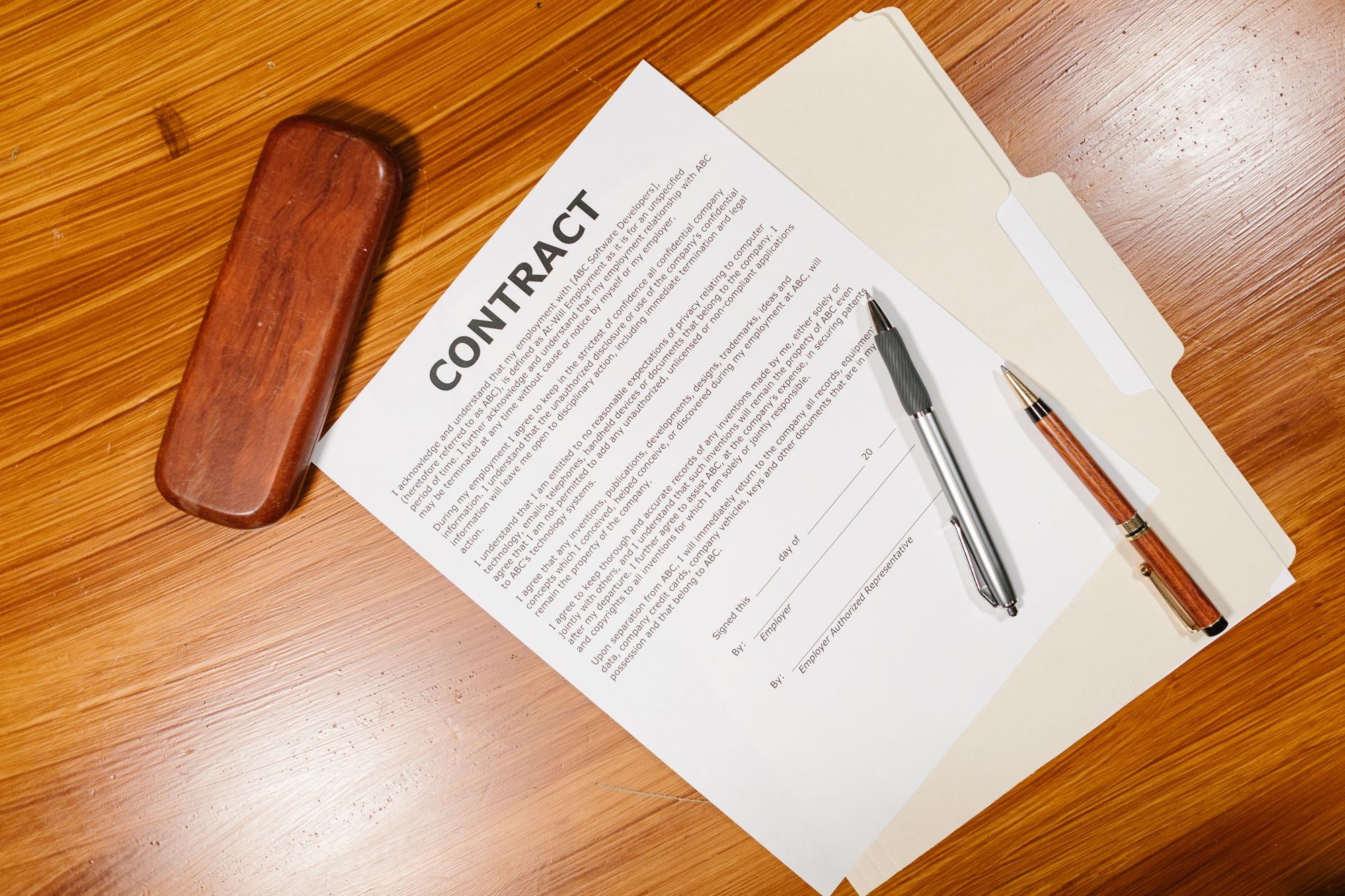
Copy this, fill the brackets, and check the day count against your state before you deliver it. It is plain on purpose. A rent increase letter is not the place for a paragraph about rising costs; the tenant knows costs went up, and a long explanation reads as an invitation to negotiate.
Notice of rent increase
Date: [date you deliver it]
To: [tenant name(s)], [unit address]
This letter is your written notice that the monthly rent for [unit address] will change from $[current rent] to $[new rent], effective [date]. That date is at least [number] days from the date of this notice, which meets [state statute or lease section]. Every other term of your lease stays the same.
Please pay the new amount starting with the [month] payment, by the same method you use now. If anything in this notice is unclear, reach me at [phone or email].
Thank you for renting from me.
[Your name], owner
[Your mailing address]
[Signature]
If the tenant is on a housing choice voucher, send the same request to the housing authority on its own form at least 60 days out. The authority runs a rent reasonableness check against comparable unassisted units before it approves the new amount, and the tenant’s share only changes once that clears.
How much should you raise the rent?
The short version: small and regular beats large and rare. A tenant who sees a modest increase every year at renewal budgets for it. A tenant who sees nothing for three years and then a 15 percent jump starts looking at listings, and in Oregon and much of California a jump that size is not legal in one step anyway. Washington’s cap does not apply if you live in one unit of a duplex, triplex or fourplex, or if the unit’s first certificate of occupancy is 12 years old or less (RCW 59.18.710).
How to pick the new rent using local comps
Before I pick a number I pull three current listings for units like mine within a mile and write down the rents. Not what I think the unit is worth, not what a rent estimator says; what similar units are asking this month. If my rent is more than about 10 percent under those, I plan to close the gap over two renewals. If it is close, the increase tracks whatever my taxes and insurance did.
The turnover math: the number that keeps me from over-reaching is what it costs when a good tenant leaves. Here is an illustration with round numbers, using your own figures in place of mine:
In that example one turnover costs about $1,875 before you count your own hours, which is two years of the increase. For a tenant who pays on time and does not call about small things, I would rather take $50 and keep them. For a tenant I am hoping will leave, the market number is the market number.
The question is never whether I can get $75 more. It is whether $75 pushes this person out.The turnover math, on a unit renting about $1,200
My own upstairs unit rents for about $1,200 against a payment of about $2,880 on the whole building; the full breakdown is in how much the tenants actually covered. Every $50 of rent on that unit is $600 a year of my housing cost, which is why the decision gets more attention than the letter.
When you cannot raise the rent
The rules above assume a normal increase at a normal time. Some increases are off the table no matter how much notice you give:
- Mid-lease. A fixed-term lease locks the rent unless it contains an escalation clause. Wait for the renewal.
- The first year, in Oregon and Washington. No increase at all until the tenancy is a year old, then 90 days’ notice. Washington lifts the first-year ban for the RCW 59.18.710 exemptions: an owner living in one unit of a duplex, triplex or fourplex, a unit whose first certificate of occupancy is 12 years old or less, and a few public and nonprofit categories.
- As retaliation. Raising rent because a tenant complained to code enforcement, joined a tenant group, or filed a fair housing complaint is barred by state law in most states and by federal rule (24 CFR 100.400) when the complaint was a fair housing one.
- Selectively, by protected class. A different increase for the family with children, or the tenant with a disability, is a fair housing violation even if each letter is properly served.
- Above a local or state cap. Where a cap exists, the cap wins, and Oregon makes a landlord who goes over it liable for three months’ rent plus damages.
None of this stops a normal, evenly applied, properly noticed increase. It does mean the paper trail matters: the market listings you pulled, the date you delivered the letter, and the same percentage for every unit in the building.
Raising rent on the tenant next door
No statute covers the fact that in a house hack the tenant is your neighbor. Three things help.
- Tell them in person a few days before the letter, so the paper is not the first they hear of it.
- Tie the timing to the renewal, so it reads as a term of the lease and not a reaction.
- Keep the amount inside what the listings support, so if they check, the numbers agree with you.
The rest of the neighbor side of this is in living next to your tenants, and the tax side of the extra income is in landlord tax deductions for house hackers. If you are still deciding what rent to set on a unit you have not bought yet, run the building through the house hacking calculator first; the rent you can charge is an input there, not an output.
Frequently asked questions
How much notice does a landlord have to give to raise rent?
Rent increase notice is defined as the written warning a landlord must deliver before a higher rent takes effect, and the minimum is set by state law. Thirty days is the floor for month-to-month tenants in most states. Oregon and Washington require 90 days after the first year of a tenancy; California requires 30 days for an increase of 10 percent or less and 90 days for anything larger; a voucher tenant’s increase must reach the housing authority 60 days ahead.
Can a landlord raise rent in the middle of a lease?
A fixed-term lease is defined as an agreement that locks the rent for its term, so a mid-lease increase is not allowed unless the lease itself contains an escalation clause. The increase takes effect at renewal, or, for a month-to-month tenant, after the state’s minimum written notice.
What should a rent increase letter say?
A rent increase letter is defined as a dated, signed written notice that states the tenant and unit, the current rent, the new rent, the effective date, and that all other lease terms stay the same. Oregon’s statute requires the amount of the increase, the new rent and the effective date by name, and Washington requires its Department of Commerce form.
How much can a landlord raise rent per year?
The allowed increase is defined by the state and city where the unit sits, and most states set no cap at all. Oregon and Washington cap annual increases at the lesser of 10 percent or 7 percent plus inflation, which works out to 9.5 percent in Oregon and 9.683 percent in Washington for 2026. In Washington the cap does not apply if you live in one unit of a duplex, triplex or fourplex, or if the unit’s first certificate of occupancy is 12 years old or less. California caps increases on many buildings under a separate statute. Where there is no cap, the practical limit is what comparable units rent for and what a turnover would cost you.
Sources
- California Civil Code section 827 (2025 code, as amended by SB 1103). 30-day and 90-day notice tiers by size of increase; mailing under CCP 1013.
- Oregon Revised Statutes 90.323, maximum rent increase, exceptions, notice (current through early 2026). 2026 percentage from the Oregon Department of Administrative Services.
- Washington State Department of Commerce, HB 1217 Landlord Resource Center: 2026 maximum 9.683 percent, 2027 maximum 10 percent, RCW 59.18.700 first-year rule and required notice form. Notice period from RCW 59.18.140.
- Minnesota Attorney General, Landlords and Tenants: Rights and Responsibilities, Ending the Tenancy (Minn. Stat. 504B.135 and 504B.147, 2024).
- HUD, Housing Choice Voucher Program, Forms for Landlords: request for rent increase submitted to the PHA at least 60 days before the effective date; rent reasonableness.
- 24 CFR 100.400, prohibited interference, coercion or intimidation under the Fair Housing Act.
Two limits on what is above. The Oregon 9.5 percent figure for 2026 is quoted from the Oregon Department of Administrative Services announcement, not recomputed from the CPI series. California’s statewide cap (AB 1482, Civil Code 1947.12) is pointed at but not summarized here, because I did not read that statute for this post; it has its own exemptions and its own percentage, so read it before relying on it. The turnover example uses round illustrative figures, not a survey. State and city rules change; the statute links above are the ones to re-read before you deliver a notice. This is not legal advice. Last checked: September 14, 2026.
Get started with the newsletter!
Useful, relevant analysis, tools, tricks, and what you need to know on the journey to financial freedom. From the van years to a duplex, the plain math and none of the hype.
Subscribe and get the free $0-to-First-Property Roadmap to start.
No spam. Unsubscribe in one click.
Want the deeper toolkit? The guides and spreadsheets are in the shop, from $5, and the free tools stay free either way.
Sources
- [S1] Washington State Legislature, 2025 c 209 s 101, effective May 7, 2025; expires July 1, 2040, read 24 September 2026: “RCW 59.18.710(1): "A landlord may increase rent in an amount greater than allowed under RCW 59.18.700 only as authorized by the exemptions described in this section. Rent increases are not limited by RCW 59.18.700 for any of the following types of…” app.leg.wa.gov.
- [S2] Washington State Legislature, RCW 59.12.040 as amended by 2026 c 144 s 1, checked September 2026. app.leg.wa.gov.