

A no money down mortgage is defined as a loan that finances 100% of the purchase price. Two programs do it: VA loans for eligible service members and veterans, and USDA Section 502 guaranteed loans in eligible rural areas. Everything else has a minimum, as low as 3%, which down payment assistance can often cover instead of your savings.
The question usually arrives with a suspicion attached, because most pages that answer it are trying to sell something. The plain answer is that zero down is real, it is narrow, and the far more common path is a small required down payment that somebody else pays for you. Both are worth knowing, because the second one applies to far more people than the first.
Which loans require no down payment
Two federal programs finance the whole purchase price. Neither is open to everyone.
VA loans
VA-backed loans require no down payment and no monthly mortgage insurance. Three rules shape what you can buy with one:
- Occupancy: you have to live in the property.
- Size: up to four units, with one additional unit allowed per additional participating veteran.
- Insurance: there is no monthly mortgage insurance, which is the part that makes the payment smaller than an FHA equivalent at the same price.
The catch: eligibility is service-based, so it is either available to you or it is not. There is also a one-time funding fee, charged as a percentage of the loan, which varies with your down payment and with whether this is your first VA loan. It can be rolled into the loan rather than paid at closing, and it is waived entirely for borrowers receiving or eligible for compensation for a service-connected disability, among other cases listed by VA.
Because a VA loan reaches four units, it is the strongest zero-down path into a building that partly pays for itself. I covered the specifics in using a VA loan on a duplex or fourplex.
USDA Section 502 guaranteed loans
USDA’s Section 502 guaranteed program offers 100% financing through approved lenders. As of September 2026 its program page sets out three requirements:
- Income at or below 115% of the area’s median household income, counted at the household level.
- Occupancy, meaning you live in the dwelling as your primary residence.
- Location inside an eligible rural area, which USDA defines on its own eligibility map rather than by intuition. Many outer suburbs qualify.
There is a guarantee fee on these loans in place of mortgage insurance. I am not quoting a figure for it here because I could not read it from a USDA source today, and a number I cannot trace is not one I will publish.
One thing I could not verify: whether Section 502 can be used on a two-unit building. The program sits inside USDA’s Single Family Housing line and the program page refers to a single dwelling, but the handbook that would settle it was unreachable when I checked. If a duplex is your plan, ask a USDA-approved lender before counting on it.
What each program requires on a $250,000 home
Here is the same purchase price across the common owner-occupied programs, so the gap between zero and low is visible.
| Program | Minimum down | On $250,000 |
|---|---|---|
| VA | 0% | $0 |
| USDA Section 502 guaranteed | 0% | $0 |
| Conventional, one unit | 3% | $7,500 |
| FHA, credit 580 or above | 3.5% | $8,750 |
| Conventional, two to four units | 5% | $12,500 |
| FHA, credit 500 to 579 | 10% | $25,000 |
Minimums only. A lender may require more. $250,000 is an illustration price.
The rule people get wrong: the 3% conventional option is for one-unit properties only. On a two- to four-unit building you will live in, conventional financing starts at 5%, and that holds for HomeReady and Home Possible too, which cap two- to four-unit loans at 95% and require income at or below 80% of area median.
FHA is the exception that makes small multifamily reachable, because its 3.5% minimum applies to one through four units alike. That is the path I used, and the one most first house hacks run on.
How down payment assistance covers the gap
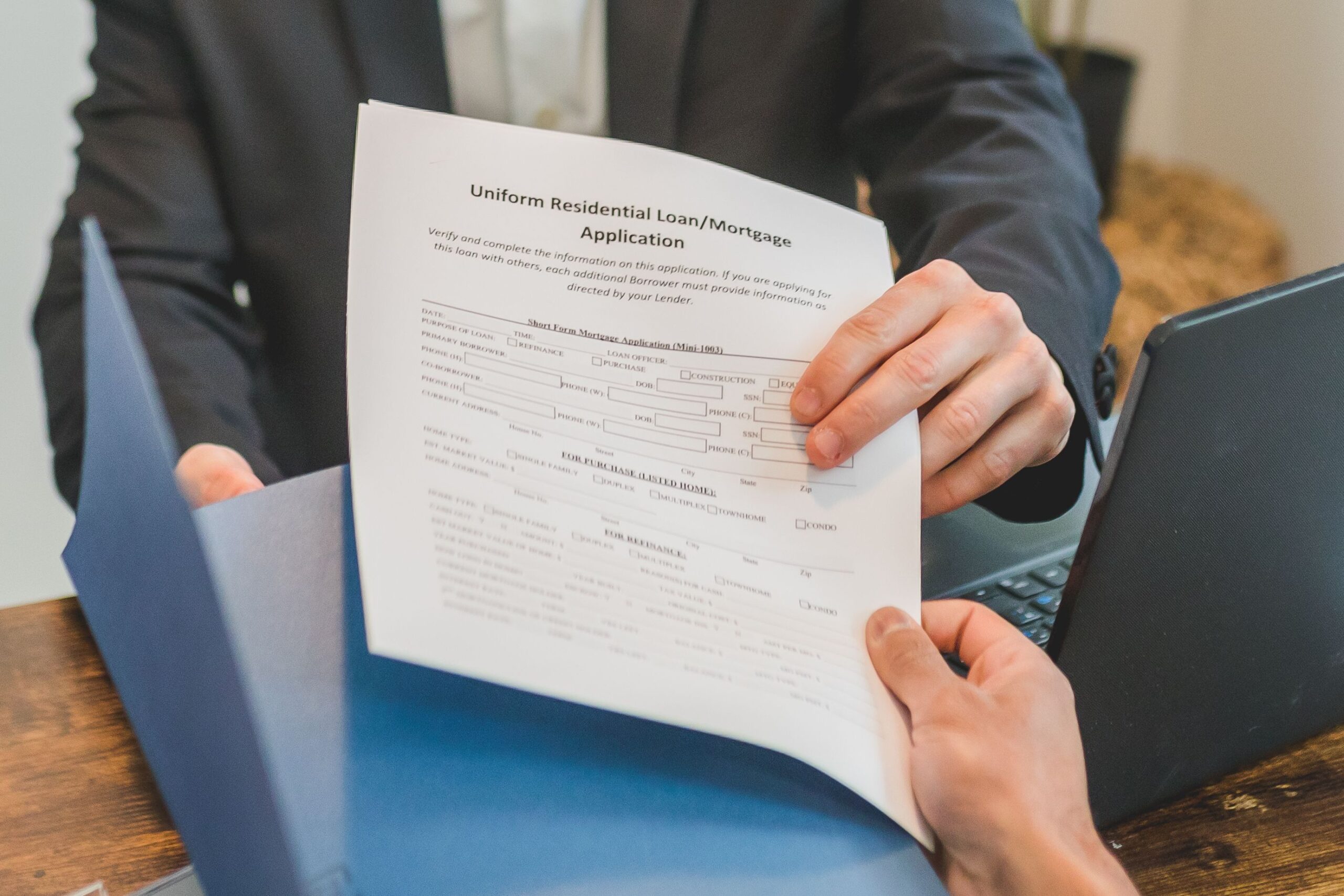
For most people this is the real answer to the question. The down payment does not have to be zero if it does not have to be yours.
Down Payment Resource counted 2,746 active assistance programs as of July 1 2026. They are run by states, counties, cities and housing finance agencies, and they come as grants, forgivable second mortgages, or deferred loans repaid only when you sell.
Four examples, each with the date I last read the program page:
- Ohio, OHFA Your Choice: 3% of the purchase price for conventional loans or 3.5% for FHA, VA and USDA, forgiven after seven years, and usable on one- to four-unit properties. Read September 2026.
- Minneapolis ACCESS: up to $20,000. Read July 2026.
- Wisconsin, WHEDA Easy Close: up to 6% of the purchase price; one- and two-unit homes with a WHEDA FHA loan, two- to four-unit with its conventional loan. Read September 2026.[S1]
- Pittsburgh URA: up to $7,500 for first-time buyers under 80% of area median income, or $5,000 from 80% to 115%, on a home of up to two units. Read September 2026.[S2]
Program terms change without announcement, so treat any figure you read anywhere, including this one, as a starting point to confirm with the agency. I go through how the programs are structured in first-time home buyer programs explained.
A county first-time-buyer program is how I bought a $185,000 starter home in February 2018, and three years later that equity became the 3.5% down, about $16,450, on a $470,000 duplex, which is the sequence I would repeat.
What buying with no money down still costs
Zero down means zero down payment. It does not mean zero cash.
- Closing costs, which run a few percent of the price and are separate from the down payment. Sellers can contribute toward them, and many assistance programs cover them as well.
- The upfront fee, VA’s funding fee or USDA’s guarantee fee, which can usually be financed but increases the balance.
- Reserves, meaning months of payments a lender may want to see after closing.
- The larger payment, because financing 100% of the price means a bigger loan than financing 95% of it.
That last line is the one worth sitting with. A no-down loan does not make a house cheaper. It moves the cost from a lump sum you have to save into a monthly payment you have to carry, which is a good trade only if the payment fits.
Zero down changes when you pay, not how much.Which is still often the right trade, if the payment works.
Whether the payment fits is the question the down payment conversation tends to crowd out. If the building has a second unit, run it with the rent included before deciding anything.
Next step
Put a listing you are actually looking at into the house hacking calculator with the down payment set to zero, then set it to 3.5%, and compare the monthly payment against what you pay in rent now. It is free and there is no signup.
Frequently asked questions
Can you buy a house with no money down?
Yes. A no money down mortgage is defined as one that finances 100% of the purchase price, and two programs offer it: VA loans for eligible service members, veterans and some surviving spouses, and USDA Section 502 guaranteed loans for buyers under the income limit in eligible rural areas. Closing costs are still owed separately.
What is the lowest down payment on a house?
Minimum down payment is defined as the smallest share of the purchase price a loan program will accept, and the floor is 0% through VA or USDA. Outside those programs it is 3% on a conventional loan for a one-unit home, 3.5% on an FHA loan for one to four units, and 5% on a conventional loan for a two- to four-unit property.
Can you buy a duplex with no money down?
Yes, through a VA loan. VA financing is defined as a zero-down loan covering buildings of up to four units, one of which you occupy. USDA sits in its single-family line and its treatment of two-unit buildings is something I have not verified, so ask an approved lender. FHA reaches a duplex at 3.5% down rather than zero.
Does down payment assistance count as no money down?
Down payment assistance is defined as a grant or second loan that supplies the required down payment on your behalf, so the cash out of your own account can reach zero even though the loan itself requires a down payment. Down Payment Resource counted 2,746 such programs as of July 1 2026.
Is a no down payment mortgage a bad idea?
No down payment mortgages are defined as larger loans against the same property, which means a higher monthly payment and little equity at the start. They are a reasonable choice when the payment fits your budget and you plan to stay, and a risky one when the payment is only affordable on optimistic assumptions.
Get started with the newsletter!
Useful, relevant analysis, tools, tricks, and what you need to know on the journey to financial freedom. From the van years to a duplex, the plain math and none of the hype.
Subscribe and get the free $0-to-First-Property Roadmap to start.
No spam. Unsubscribe in one click.
Want the deeper toolkit? The guides and spreadsheets are in the shop, from $5, and the free tools stay free either way.
Sources
USDA Rural Development, Single Family Housing Guaranteed Loan Program. Read September 21 2026.
- [S1] Wisconsin Housing and Economic Development Authority (WHEDA), read 24 September 2026: “Maximum loan amount is 6% of the purchase price when partnered with a WHEDA Conventional first mortgage loan"; "Maximum loan amount is 6% of the purchase price when partnered with a WHEDA FHA first mortgage loan” www.wheda.com.
- [S2] Urban Redevelopment Authority of Pittsburgh (URA), read 24 September 2026: “Each property may contain up to two connected dwelling units (i.e., duplex, townhouse), one of which must be owner-occupied.” www.ura.org.
US Department of Veterans Affairs, VA funding fee and loan closing costs. Read September 21 2026.
FHA minimum down payments and credit tiers: HUD Single Family Housing Policy Handbook 4000.1. Conventional loan-to-value limits: Fannie Mae Selling Guide, eligibility matrix.
Program count: Down Payment Resource, Q2 2026 Homeownership Program Index, as of July 1 2026.
State and city assistance amounts: each agency’s own program page, read July or September 2026 as noted beside each figure.