

Rent-to-own is an agreement where you rent a home with the option or obligation to buy it later, usually paying an upfront option fee and above-market rent, with part of the rent sometimes credited toward the purchase. It can work when a contract is lawyer-reviewed and you are nearly mortgage-ready; it goes badly when the option fee and rent credits are forfeited, which is the common outcome when buyers cannot close in time.
Rent-to-own gets pitched to exactly the people with the fewest alternatives: buyers who cannot qualify for a mortgage yet but want out of renting. I understand the appeal, because the pitch sounds like a bridge. Sometimes it is. But the economics of these agreements are tilted toward the seller in ways that are not obvious from the ad.
This post walks through how the money actually flows, where the traps sit, and the alternatives I would check before signing one.
This is general information, not legal or financial advice; if you take one thing from this page, let it be that a rent-to-own contract is worth a real estate attorney’s hourly fee before you sign it.
How rent-to-own works, step by step
A typical agreement has four money pieces.
- An option fee, often several percent of the home’s price, paid upfront for the right to buy later.
- Rent, usually set above the market rate for the same house.
- Rent credits, a slice of each month’s rent the seller promises to count toward your purchase.
- A locked purchase price, or a formula for one, set today for a sale that happens years from now.
The lease runs one to three years, and at the end you either exercise the option by getting a mortgage and closing, or you walk away.
| Money piece | What it is | Where it goes if you do not close |
|---|---|---|
| Option fee | Often several percent of the price, paid upfront for the right to buy later | Almost always non-refundable. It stays with the seller |
| Rent | Usually set above the market rate for the same house | Spent, as rent |
| Rent credits | A slice of each month’s rent the seller promises to count toward the purchase | Usually vanish if you miss the deadline, miss payments, or cannot qualify in time |
| Locked price or formula | The purchase price, or the way it will be calculated, agreed at signing | Irrelevant once you are out of the agreement |
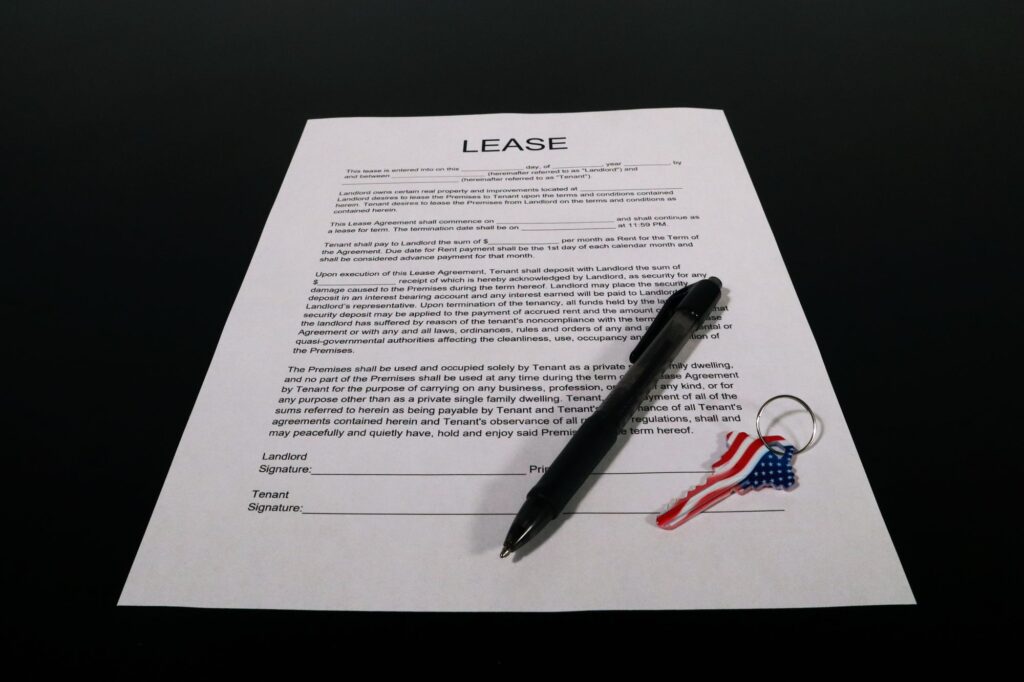
Lease option vs lease purchase: the distinction that decides your risk
Lease option versus lease purchase
A lease option gives you the right, but not the obligation, to buy at the end; if life changes, you can walk away and lose only what you have paid in. A lease purchase obligates you to buy, and a buyer who cannot get a mortgage at the end of one can be sued for breaching the contract, not just out their fees. The words sound interchangeable and are not. If you sign anything in this category, know which one it is before you know anything else about it.
| Lease option | Lease purchase | |
|---|---|---|
| What it gives you | The right to buy at the end, not the obligation | An obligation to buy at the end |
| If you cannot get a mortgage in time | You walk away and lose what you have paid in | You can be sued for breaching the contract, not just lose the fees |
The two names sound interchangeable. They are not.
Where rent-to-own deals go wrong
The failure mode is concentrated in one place: the buyer does not close, and everything extra they paid stays with the seller.
- The option fee is almost always non-refundable.
- The rent credits usually vanish if you miss the deadline, miss payments, or cannot qualify for the loan in time.
- Credit repair regularly takes longer than the lease runs.
- Some contracts shift repairs and maintenance onto you while you are still legally a tenant, so you carry an owner’s costs with a renter’s rights.
- A price locked in today can end up above the home’s value at closing time, in which case the lender will not cover it and the option is worthless anyway.
None of this requires a dishonest seller; it is just how the standard structure distributes risk.

When rent-to-own can make sense
The setup earns its place when the obstacle between you and a mortgage is specific, small and scheduled: a credit score a known number of points away, a self-employment income history one tax return short, a seller you know and a house you are certain about. In that narrow case, a lease option with a fair price formula, written rent credits held in escrow, and an attorney’s review can be a legitimate bridge. The test I would apply: if you cannot name the month you will be mortgage-ready and the lender who told you so, you are not bridging, you are hoping.
The alternatives to check before signing
Rent-to-own is worth pricing against the ordinary routes first.
- An FHA loan. Owner-occupants with a credit score of 580 or higher get in with 3.5% down (10% down with a score from 500 to 579)[S1], and it covers 2-4 unit buildings, which opens house hacking, where tenant rent helps carry the payment.
- Down-payment assistance. State and local programs can cover much of the cash gap; start with first-time buyer programs explained.
- Fixing the credit blocker directly. Building credit from nothing plus a scheduled saving plan through the Down-Payment Budget tool reaches mortgage-ready on a timeline you control, with no forfeitable fees along the way.
Rent-to-own competes against those options, and it should have to.
If you are considering rent to own because the purchase price is the obstacle, a manufactured home is worth comparing against it. The federal rules on those changed in 2026, which I went through in the ROAD Act and the chassis rule.
See what this looks like on a building you could actually buy.
The free house hacking calculator. Put in a price, a rent and your loan terms, and it returns your monthly cost with the tenant rent counted.
Frequently asked questions
What is rent-to-own and how does it work?
Rent-to-own is an agreement combining a lease with a future purchase: you pay an upfront option fee and above-market rent, sometimes with a portion credited toward the price, and at the end of the lease you buy the home or give up what you paid. The two forms are the lease option, where buying is a right, and the lease purchase, where it is an obligation.
Do you lose money in rent-to-own?
Money is lost in rent-to-own whenever the purchase does not close: the option fee is normally non-refundable and rent credits are typically forfeited. Since the buyers drawn to these agreements are the ones least likely to qualify for a mortgage on schedule, forfeiture is a common outcome rather than a rare one.
Is rent-to-own cheaper than buying?
Rent-to-own is usually more expensive than buying directly, because the rent is set above market and the option fee comes on top of it; the structure charges a premium for delaying the mortgage. Its value is access for buyers who cannot close today, not savings.
What should be in a rent-to-own contract?
A defensible rent-to-own contract states whether it is an option or an obligation, the exact purchase price or formula, the size and escrow treatment of rent credits, who pays for repairs during the lease, and the deadlines and conditions under which fees are refunded or forfeited. Have a real estate attorney read it before signing; the review costs a fraction of the option fee it protects.
Keep going
Related reading: first-time home buyer programs explained, how to buy a house for the first time, and what credit score you need to buy a house.
- The Consumer Financial Protection Bureau has published consumer warnings on rent-to-own and lease-purchase agreements, including fee forfeiture and maintenance-shifting risks (consumerfinance.gov).
- FHA owner-occupant minimum down payment of 3.5% for 1-4 unit properties: U.S. Department of Housing and Urban Development, hud.gov.
This article is general information, not legal or financial advice. Contract terms vary by state and by agreement; have yours reviewed by a licensed attorney.
Get started with the newsletter!
Useful, relevant analysis, tools, tricks, and what you need to know on the journey to financial freedom. From the van years to a duplex, the plain math and none of the hype.
Subscribe and get the free $0-to-First-Property Roadmap to start.
No spam. Unsubscribe in one click.
Want the deeper toolkit? The guides and spreadsheets are in the shop, from $5, and the free tools stay free either way.
Sources
- [S1] U.S. Department of Housing and Urban Development (HUD), FHA Resource Center, checked September 2026: FHA’s minimum down payment on a one-to-four-unit home you live in is 3.5% with a credit score of 580 or higher, and 10% with a score of 500 to 579. answers.hud.gov.