

Affordability with a house hack is defined as the home price a lender will approve when part of the building’s rent counts as your income. On a two- to four-unit home you live in, lenders count 75% of the other unit’s rent; FHA adds it to your income. On my FHA duplex that was about $900 a month of qualifying income against a payment of about $2,880, and about $1,680 out of pocket at today’s rent before the basement suite.[S1]
The standard affordability calculator asks for your income, your debts and your down payment, and gives back a price. It assumes you carry the whole payment yourself. If you buy a duplex and rent the other half, that assumption is wrong, and the lender knows it. This post walks through how the rent changes what you qualify for, and how it changes what you can live with, which is a different number.
How lenders decide how much house you can afford
The one ratio that matters: debt-to-income, or DTI. The Consumer Financial Protection Bureau defines it as all of your monthly debt payments divided by your gross monthly income, meaning income before taxes. The proposed mortgage payment goes on the debt side, along with car loans, student loans and credit card minimums.
Each loan program sets a ceiling on that ratio:
- Conventional, manually underwritten: 36% under Fannie Mae’s guide, or 45% with strong credit and reserves.
- Conventional, automated underwriting: up to 50%.
- FHA, a common route for first house hacks: files routinely land near the top of that range through automated underwriting with compensating factors.
Run your own two ratios in the free debt-to-income calculator before you talk to anyone. It is easier to hear a lender’s number when you already know yours.

How rental income counts toward a mortgage on a duplex
This is where a house hack changes the math. When you buy a two- to four-unit property and live in one unit, the lender is allowed to count rent from the other units when you qualify, even if you have never been a landlord. The rule, in Fannie Mae’s guide and in FHA’s handbook, is the same: multiply the expected rent by 75%.
- The other 25% is a haircut for vacancy and repairs. It is not negotiable.
- The rent figure comes from the appraiser, who fills out a rent schedule as part of the appraisal, or from a signed lease if the unit already has a tenant. The lender uses the lower of the two.
The rule for first-timers: if you have less than twelve months of experience managing a rental, Fannie Mae lets the rent offset the payment on the building but not add to your income beyond that. The rent shrinks the housing payment the lender counts against you, and your job income does the rest. FHA works the other way: it counts the full payment and adds the 75% to your income, with no landlord-experience requirement.
FHA adds one more test on three- and four-unit buildings, where 75% of the rent from all units has to cover the whole payment. It does not apply to a duplex. I covered it in FHA vs. conventional for house hacking.
Worked example: my $470,000 duplex three ways
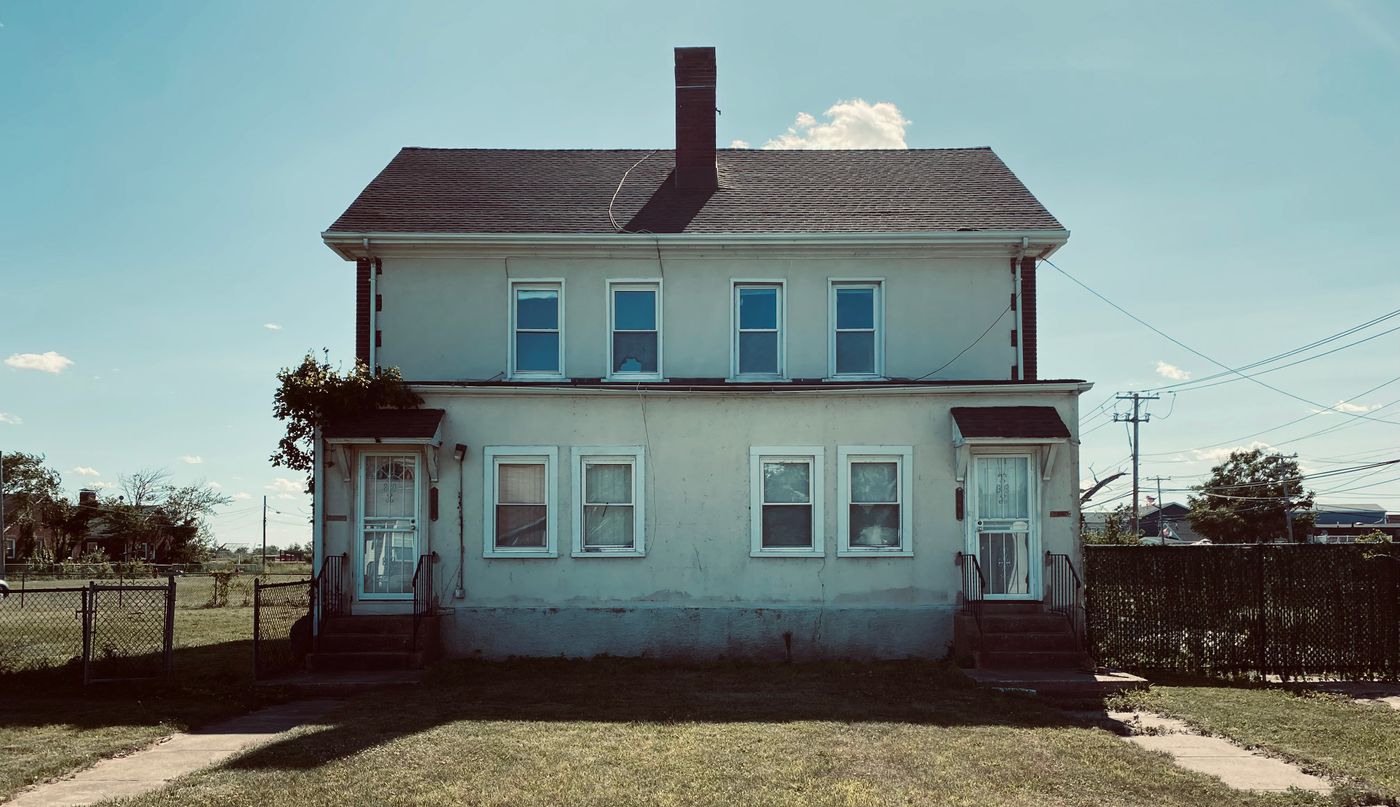
The building I bought is a $470,000 duplex with an FHA loan and 3.5% down. The full payment, with taxes, insurance and mortgage insurance, was about $2,880 a month in my first year. The upstairs unit rents for about $1,200 today; it was roughly $1,100 that first year. Here is the same payment from three angles, at today’s rent.
Figures are approximate; the ledger posts carry the exact numbers.
| Angle | Monthly figure | How it is calculated |
|---|---|---|
| What the payment is | $2,880 | Principal, interest, taxes, insurance and FHA mortgage insurance |
| What the lender adds to my income | $900 | 75% of $1,200 rent; the full $2,880 still counts as the payment |
| What I pay after the rent arrives, before the basement suite | $1,680 | $2,880 minus the full $1,200 at today’s rent; at the first year’s $1,100 it was about $1,780 |
Figures are approximate; the ledger posts carry the exact numbers.
The middle line is the one that decides approval. On my FHA loan the lender counted the full payment of about $2,880, then added about $900 a month, 75% of the rent, to my income. At a 43% back-end ratio, that means about $900 less of my own gross monthly income to qualify for the same building. On a conventional loan without that 12-month landlord history, Fannie will not let the $900 be added to your income — but it does not come off the payment either; the full $2,880 stays in your debts, because the rent is not netted against the payment on a home you live in (B3-3.8-01). You simply lose the income credit.
Put plainly: a single-family home at the same price would have needed me to qualify for the full payment of about $2,880 on my job income alone. The duplex let about $900 of the tenant’s rent count as my income. Same price, same rate, same down payment. The difference is the second door.
What you qualify for versus what you can afford
The lender’s number is a ceiling. It is not a recommendation, and it is calculated on gross income, which is money you never see. The number to live by is the bottom line of the table: what you send every month after the rent lands, plus everything the rent does not cover.
In my first full year with both units producing, the tenants covered about 73% of the mortgage payments, and none of the utilities or the two one-time repairs that came with the building in its first years. The month-by-month ledger is in how much the tenants covered. Before you set your own ceiling, budget for:
- Vacancy. The lender’s 25% haircut is a reasonable place to start. Model at least one empty month a year.
- Repairs and maintenance. Old buildings run 12% to 15% of rent. Mine is from 1925 and earned every point of that.
- Utilities you carry. If the building is not separately metered, the whole bill is yours. Mine runs about $6,000 a year.
- Reserves. Cash to carry the full payment, about $2,880 on mine, for a few months if the unit sits empty. How much is in how much to save before buying.
A useful rule: qualify with the rent counted, but make sure you could survive a few months without it. If losing the tenant for a season would mean missing the payment, the price is too high, whatever the lender approved.
How to raise the price you can afford without raising your income
Three levers move the number more than a raise does, and all three are available to a first-time buyer.
- Buy more doors. A duplex counts one unit of rent. A triplex or fourplex counts two or three, still on an owner-occupied loan with 3.5% down. The extra rent raises your qualifying room and usually your monthly gap as well.
- Cut the debts on the other side of the ratio. Paying off a $350-a-month car loan frees the same qualifying room as about $800 in gross monthly income at a 43% ratio. It is often the cheapest way to move the ceiling.
- Bring down payment assistance. A county or state program that covers part of the down payment does not change your DTI, but it can move you from a cheaper building to a better one at the same cash out of pocket. I bought my first home through a county program; the options are in first-time buyer programs explained.
What this means for you: the income you have today supports a bigger building than the standard calculator says, because the standard calculator does not know a tenant is coming. Run the plain version first, then run the house hack version with the rent counted, and look at the distance between them. That distance is the whole strategy, in one number. The wider picture of how it works is in what is house hacking.
Next step
Start with the free how much house can I afford tool for the plain ceiling, then put a listing’s price and its second-unit rent into the house hacking calculator to see your share of the payment with the rent counted. No signup, no email wall.
Frequently asked questions
How much house can you afford when house hacking?
Affordability when house hacking is defined by your debt-to-income ratio once 75% of the other unit’s rent is counted: FHA adds it to your income, and a conventional loan without 12 months of landlord experience subtracts it from the proposed payment. On a payment of about $2,880 with about $1,200 of rent, that is about $900 a month in your favor, so the same salary qualifies for a larger building than it would for a single-family home at the same price.
Does rental income count toward mortgage qualification on a duplex?
Rental income on an owner-occupied duplex is defined as qualifying income at 75% of the appraiser’s market rent or the signed lease, whichever is lower, under both Fannie Mae and FHA rules. On a conventional loan, buyers with under a year of landlord experience can use it only to offset the building’s payment; FHA adds it to income.
What debt-to-income ratio do you need for a house hack?
The required ratio is defined by the loan program: Fannie Mae caps manually underwritten loans at 36%, allows 45% with strong credit and reserves, and up to 50% through automated underwriting. FHA files commonly reach the high 40s through automated underwriting with compensating factors. Counting the rent lowers the ratio the lender sees.
Should you borrow the maximum a lender approves for a house hack?
The maximum approval is defined as a ceiling calculated on gross income with the rent counted, not a budget. A safer target is a payment you could carry for several months with the other unit empty. If one vacancy would mean a missed payment, the price is too high regardless of the approval.
Sources
- Fannie Mae Selling Guide, B3-3.8-02, Rental Income from the Subject Property (gross rent multiplied by 75%; borrowers with under 12 months of management experience may use it to offset the payment only). selling-guide.fanniemae.com. Read September 2026.
- Fannie Mae Selling Guide, B3-6-02, Debt-to-Income Ratios (36% manual maximum, 45% with credit and reserve requirements, 50% through Desktop Underwriter). selling-guide.fanniemae.com. Read September 2026.
- Consumer Financial Protection Bureau, What is a debt-to-income ratio? consumerfinance.gov. Last reviewed August 2023.
- U.S. Department of Housing and Urban Development, Single Family Housing Policy Handbook 4000.1 (FHA rental income and self-sufficiency rules). hud.gov.
- Payment, rent and expense figures are from my own mortgage statements and lease, rounded; the twelve-month detail is in the post linked above.
If you want the next post as it lands, the blog page has the subscribe box. If you have a listing and a preapproval letter and the two do not agree, send me the numbers and I will run them with you.
Get started with the newsletter!
Useful, relevant analysis, tools, tricks, and what you need to know on the journey to financial freedom. From the van years to a duplex, the plain math and none of the hype.
Subscribe and get the free $0-to-First-Property Roadmap to start.
No spam. Unsubscribe in one click.
Want the deeper toolkit? The guides and spreadsheets are in the shop, from $5, and the free tools stay free either way.
Sources
- [S1] Van to Vault, read 24 September 2026: “Twelve months, twelve payments of $1,100, no late rent, no vacancy." / "The upstairs rent is rounded; the same unit is at about $1,200 now.” vantovault.com.