
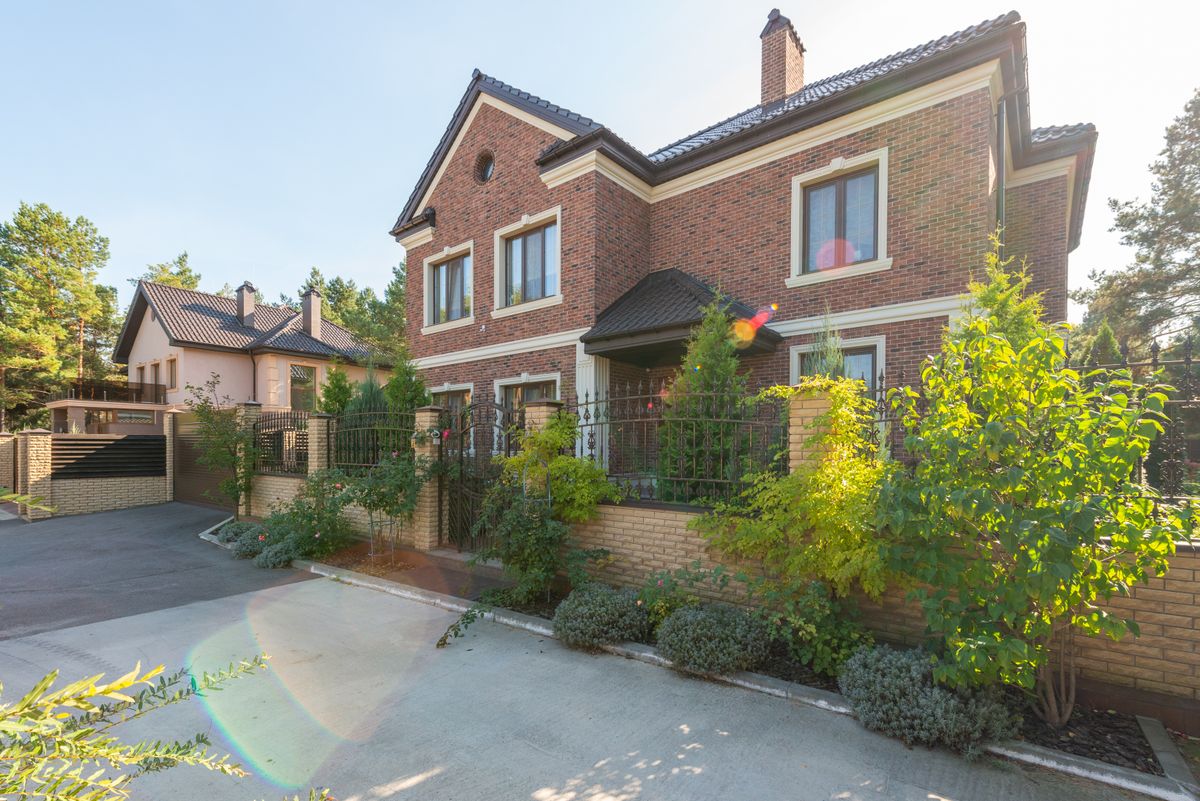
I bought my duplex with a mortgage under 4%. When I write about my figures, that rate is the first thing people push back on, and the pushback is fair. The Freddie Mac survey average sat at 6.66% for the week of July 30, 2026, roughly double what I locked in, prices did not fall to compensate, and a strategy that looked automatic in the low-rate years now requires an actual decision.
Rates in this post are a snapshot. The payment figures below are calculated at a 30-year fixed rate of 6.66%, the Freddie Mac Primary Mortgage Market Survey average for the week ending July 30, 2026. Rates have moved since; the figures here have not been recalculated.
So the question deserves a direct answer: does house hacking still work when borrowing costs this much? The mechanism still works, because it relies on collecting rent inside your largest expense rather than on cheap debt. The math is below.
House hacking math at 6.66%: a $470,000 duplex
At 6.66%, the $470,000 duplex costs about $3,850 a month versus about $2,880 under 4%; after a tenant paying about $1,200, about $2,650 versus about $1,680, a rate penalty of about $970 a month.
Here is my building priced at both rates. The loan is $453,550, which is 96.5% of the purchase price after the FHA minimum 3.5% down payment of $16,450. Taxes, insurance and mortgage insurance stay at the roughly $940 a month I actually pay, so only the rate moves. The upstairs rent is about $1,200 in both columns, today’s level; in my first year it was about $1,100, so my actual cost after that tenant was about $1,780 (approximate figures).[S2]
| Line | My deal, under 4% | Same duplex at 6.66% |
|---|---|---|
| Principal and interest | $1,943 | $2,915 |
| Taxes, insurance, MIP | $937 | $937 |
| Full monthly payment | $2,880 | $3,850 |
| Less upstairs rent | $1,200 | $1,200 |
| Cost after one tenant | $1,680 | $2,650 |
| Basement short-term rental | brings mine to a few hundred | varies by market |
Figures are approximate; the ledger posts carry the exact numbers.
The rate change costs about $970 a month, which is a meaningful penalty and worth naming plainly. What the table also shows is that the house hacker at 6.66% pays about $2,650 while someone buying the same building with no tenant pays $3,850.
What that means: the strategy has become less powerful in absolute terms while keeping its advantage over the alternatives, which are renting, or buying a place with no income attached. I worked the renting side of this comparison in the 2026 rent versus buy math.
Figures are approximate; the ledger posts carry the exact numbers.
What changed for house hackers since 2021
Since 2021, payments are higher relative to rents, the margin for underwriting error is thinner, and a metro’s price-to-rent ratio now decides most outcomes.
Three things are materially different, and it helps to be specific.
- Payments are higher relative to rents. At 3% a duplex often covered most of its own payment. At 6.66% the same building leaves a wider monthly gap, so the promise has shifted from living nearly free toward cutting your housing cost by a large fraction. That is a downgrade, and pretending otherwise would be selling.
- The margin for error is thinner. When the gap between payment and rent is small, a vacancy is annoying. When the gap is $2,650 wide, sloppy underwriting can leave you house poor. Deals that only worked because a spreadsheet used optimistic rent now fail visibly, which I count as a feature.
- Market selection decides most of the outcome. In the low-rate years house hacking penciled almost everywhere. Now the price-to-rent ratio of your metro settles the question before you tour anything. I keep a running comparison in the best cities to buy a duplex, and the spread between the top and bottom of that list is worth more than a full percentage point of interest.
What still works about house hacking in 2026
FHA still allows 3.5% down on owner-occupied two-to-four-unit properties for buyers with a credit score of 580 or higher, FHA lenders count 75% of the other unit’s rent as income, and a high rate can be refinanced.[S1]
The down payment requirement. FHA still allows 3.5% down on two-to-four-unit properties you occupy if your credit score is 580 or higher (10% down from 500 to 579), and first-time-buyer assistance programs still exist in most states. My first home, a $185,000 starter house, only happened because a county program covered ground I could not. The entry cost remains a fraction of the 20 to 25 percent an investor pays.
| Loan on the $470,000 duplex | Minimum down | Down payment in dollars | The catch |
|---|---|---|---|
| FHA, owner-occupant, 2 to 4 units | 3.5% | $16,450 | Must live in one unit for at least a year; mortgage insurance generally for the life of the loan |
| Conventional (Fannie Mae), owner-occupant | 5% | $23,500 | Mortgage insurance until 20% equity; tighter credit standards than FHA |
| VA, qualifying veterans and service members | 0% | $0 | Must live in the home |
| Investor, conventional, not living there | 20 to 25% | $94,000 to $117,500 | No occupancy, no rent offset, and the whole payment is yours |
The part most first-time buyers do not know: the tenant’s rent counts toward your qualifying income before you have collected a dollar of it. On an FHA loan the lender counts 75% of the other unit’s rent as income, holding back 25% for vacancy and maintenance. Fannie Mae uses the same 75% but subtracts the full payment first, and without 12 months as a landlord the remainder can only offset that payment.
| How the $1,200 tenant enters the loan | Amount |
|---|---|
| Rent on the upstairs lease | $1,200 a month |
| Share an FHA lender counts | 75% |
| Income added to your loan file | $900 a month |
| Held back for vacancy and maintenance | $300 a month |
| Same rent on a conventional loan, no landlord history | Offsets the payment only |
Figures are approximate; the ledger posts carry the exact numbers.
- The forced-savings engine. Every payment includes principal, and your tenant funds part of it. In the first year of a 6.66% loan that is roughly $4,900 of balance retired, against about $9,300 on my cheaper loan. Slower, and still money moving from the bank’s column to yours.
- The refinance option. A high rate is a payment you can renegotiate later; a high price is permanent. I would never underwrite a deal that only works after a refinance, and it would be equally wrong to judge a 30-year strategy as though today’s rate is fixed forever.
- The comparison to renting. Rents rose through the same period rates did. The spread that matters, your all-in cost as a house hacker against your rent as a tenant, narrowed far less than the raw payment numbers suggest.
Downsides of house hacking at 6.66% rates
At 6.66%, cash flow after you move out is harder to reach, high-priced coastal duplexes mostly do not pencil, and the landlord work did not get easier.
A strategy pitched with no downsides is a sales pitch, so here are the specific ones.
- Cash flow after you move out is harder to reach. The classic plan of house hacking, moving on, and keeping the property as a rental needs the rents to cover the whole payment. At $3,850 a month, many buildings fall short of that for the first several years. If your plan depends on year-two cash flow, underwrite that year separately rather than assuming it.
- High-priced coastal metros mostly do not pencil. If a duplex costs $900,000 and units rent for $2,000, no strategy fixes that arithmetic. In those markets renting while investing elsewhere can be the better move, and the numbers will say so if you let them.
- The work did not get easier. Screening a tenant, managing a short-term rental, and living next to the people who pay you are the same jobs they always were. My year-one write-up, the duplex, year one, covers what that felt like month by month.
How to decide if house hacking works in your market
Run three figures on a real listing: the full payment at a current rate quote, a conservative rent, and your current rent. If it lands below your rent, it works.
Skip the debate and run three figures on a listing you can actually see:
- The full monthly payment at a current rate quote.
- A conservative rent estimate for the space you would lease.
- Your current rent.
The test: if the payment minus rental income lands meaningfully below what you pay now, while a tenant retires your loan balance, the strategy is working in your market at today’s rates. If it does not, you have learned something specific about where you live rather than something vague about 2026.
The free calculator does this in about two minutes per listing, with no account and no email wall. Use a rate quote you actually received, and estimate rent low.
Why lenders avoid mortgages under $100,000
The other constraint worth naming is financing. Lenders write very few mortgages under $100,000, which is the range a lot of these buildings sit in. I looked at why that happens, and what a new federal pilot might do about it, in why a $100,000 mortgage is hard to get.
See what this looks like on a building you could actually buy.
The free house hacking calculator. Put in a price, a rent and your loan terms, and it returns your monthly cost with the tenant rent counted.
Frequently asked questions
Is house hacking still worth it in 2026?
House hacking in 2026 is defined by a wider gap between payment and rent than the low-rate years produced, and it remains worthwhile wherever that gap leaves you below your current rent. On the $470,000 duplex above, the house hacker pays about $2,650 a month against $3,850 for the same building without a tenant.
Was house hacking better in 2021?
Yes. Cheap debt made every leveraged purchase better, and the same duplex cost about $970 a month less to carry. That is an argument about timing, and the timing is not returning on request. The comparison that decides anything is house hacking in 2026 against your other options in 2026.
Should I wait for rates to drop before house hacking?
Waiting is defined as a bet that rates fall faster than prices rise, and no one prices that bet reliably. A deal that works at 6.66% treats a future drop as upside. A deal that only works at an imagined future rate does not work.
Does house hacking still work with 3.5% down?
FHA financing for owner-occupied two-to-four-unit properties is unchanged and remains the lowest-down-payment entry path, though in my own count of 2025 HMDA loan data conventional loans were the more common route.[S3] The binding constraint in 2026 is finding a building where the numbers pencil, which is a market question rather than a financing one.
Keep going
- House hacking calculator, run a listing in your market at a current rate.
- Best cities to buy a duplex in 2026, where the price-to-rent ratio still works.
- The duplex, year one, what the first twelve months actually cost.
- How much can you make house hacking, the income math on the same duplex, channel by channel.
The personal version of this math, my own building priced at the 6.71% rate of the week ending September 3, 2026, and the three things I would change, is in what I would do differently at today’s rates.
Get started with the newsletter!
Useful, relevant analysis, tools, tricks, and what you need to know on the journey to financial freedom. From the van years to a duplex, the plain math and none of the hype.
Subscribe and get the free $0-to-First-Property Roadmap to start.
No spam. Unsubscribe in one click.
Want the deeper toolkit? The guides and spreadsheets are in the shop, from $5, and the free tools stay free either way.
Sources
- Freddie Mac, Primary Mortgage Market Survey, week of July 30, 2026 (30-year fixed average 6.66%). freddiemac.com/pmms
- HUD, FHA Single Family Housing Policy Handbook 4000.1 (minimum 3.5% down, owner-occupied one-to-four-unit). hud.gov
- Fannie Mae Selling Guide, B3-3.8-01 General Rental Income Information (without 12 months of landlord experience, rental income may only offset the payment). selling-guide.fanniemae.com
- [S1] U.S. Department of Housing and Urban Development (HUD), FHA Resource Center, checked September 2026: FHA’s minimum down payment on a one-to-four-unit home you live in is 3.5% with a credit score of 580 or higher, and 10% with a score of 500 to 579. answers.hud.gov.
- [S2] Van to Vault, read 24 September 2026: “Twelve months, twelve payments of $1,100, no late rent, no vacancy." / "The upstairs rent is rounded; the same unit is at about $1,200 now.” vantovault.com.
- [S3] Van to Vault, Duplex Buyers Atlas (2025 HMDA loan data), read 24 September 2026: conventional loans were 64.9% of owner-occupant 2-4 unit purchase loans in 2025 and FHA loans 28.2%. vantovault.com.
Where my figures come from: Purchase price, loan terms, payment and rent figures are from my own duplex closing documents and monthly statements.
If you want to see whether the math works where you live, run a listing through the calculator. And if the result surprises you in either direction, send me the deal. I read every one.